

Updated on: November 2, 2026
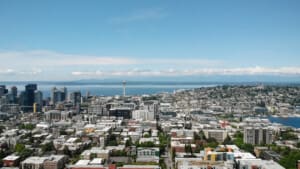
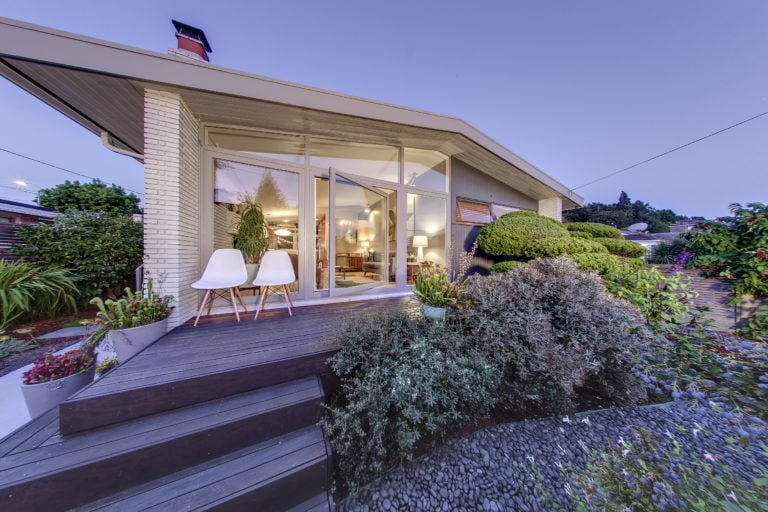
Capitol Hill is a Seattle neighborhood on the ridge immediately east of downtown, across Interstate 5. When buying a home in Capitol Hill, expect a mix of mid-rise apartment buildings, condos and historic single-family homes.
Key Takeaway
Capitol Hill has its own light rail station on Broadway. Its south and west (Pike/Pine and Broadway) are dense, busy and condo-heavy. Its north and east (15th Ave East, North Capitol Hill and Harvard-Belmont) are quieter and lined with houses. Picking a home type, and deciding how close you want to be to nightlife and the station, largely picks your part of the hill.
Who This Guide Is For
This guide is for buyers and renters weighing whether Capitol Hill fits their housing and commute needs, and which part of the hill to search.
More neighborhood guides: Volunteer Park / Harvard-Belmont Housing Market, North Capitol Hill Housing Market, Broadway Corridor, Stevens / East Capitol Hill Housing Market. Related guides: Most expensive areas in Capitol Hill.
Capitol Hill at a Glance
- East of downtown across I-5; planned as an urban center village within the First Hill/Capitol Hill Urban Center.
- Hill-wide medians: condos $470,000, single-family homes $1,639,228.
- Capitol Hill Station on Broadway runs direct trains to Westlake downtown.
- Walk Score 93; resident parking permits cost $95 per vehicle.
- Harvard-Belmont: visible exterior work needs city landmark approval first.
Where Capitol Hill Is in Seattle
Capitol Hill is not part of downtown. The city plans it as the Capitol Hill Urban Center Village, part of the First Hill/Capitol Hill Urban Center. The city’s Capitol Hill design guidelines include a map of that urban center village.
No single legislated boundary exists, but the common description runs like this:
- West: Interstate 5, with downtown, South Lake Union and Eastlake across it.
- North: E Interlaken Blvd and Interlaken Park, toward Portage Bay and Montlake.
- East: 23rd Ave, bordering the Central District and Madison Valley.
- South: the E Union St and E Madison St area, bordering First Hill and the Central District. Sources differ on exactly where this line falls, placing it at Pine St, Madison St or deeper into First Hill.
Broadway, the hill’s main north-south commercial street, is one of its three designated commercial corridors, along with 15th Avenue and East Olive Way. Multifamily and commercial zones cluster in the south and west, nearest downtown. Neighborhood Residential zones (formerly single-family) spread north and east.
The walk down to downtown is easy, but the return is a steady climb. Drivers have direct access to Interstate 5.
Capitol Hill’s Five Areas Compared
The five areas run roughly south to north. They differ in noise, housing, transit and the nearest park.
- Pike/Pine: at the southwest edge; the busiest, loudest streets, especially on weekend nights; apartments, lofts and condos only; walkable to the light rail station; Cal Anderson Park nearby.
- Broadway: down the middle of the hill; a busy daytime shopping street; apartments and condos, including newer station-area buildings; next to the light rail station and on the streetcar line; Cal Anderson Park nearby.
- 15th Ave East and East Capitol Hill: slower street traffic and small shops; townhouses, brick apartment buildings and Craftsman houses; buses and a longer walk to the station; Volunteer Park within walking distance.
- North Capitol Hill: quiet residential blocks with few shops; detached houses and smaller apartment buildings; buses rather than the train; Volunteer Park and the Lake View Cemetery grounds.
- Volunteer Park and Harvard-Belmont: at the north end; quiet, winding streets; large historic houses and a few co-ops; buses and a longer walk; Volunteer Park at the door.
The Pike/Pine Corridor
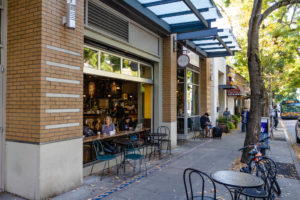
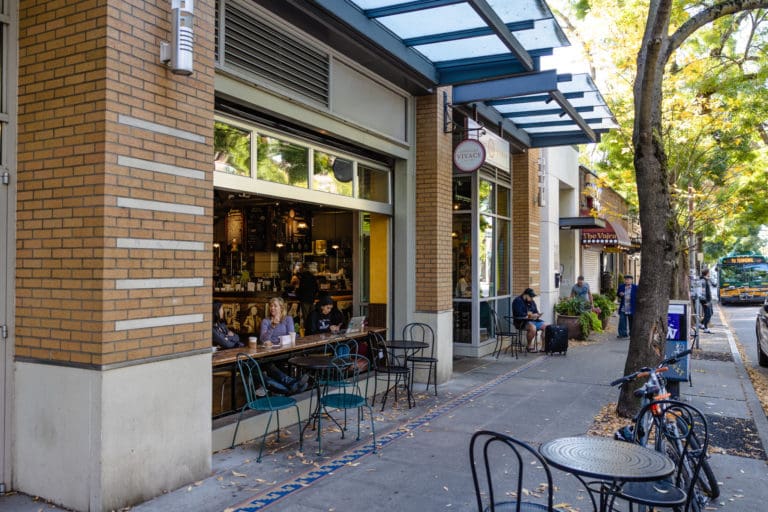
Pike and Pine streets form the entertainment hub of the hill’s south end. They have the area’s highest concentration of music venues, taverns and coffee shops, and independent retail on nearly every ground floor.
Housing here is mid-rise apartments, loft conversions and newer condos. You will not find single-family homes.
Old brick facades survive under new towers because this is the Pike/Pine Conservation Overlay District (Seattle Municipal Code Chapter 23.73). The district limits new buildings to a scale compatible with the existing blocks and encourages keeping “character structures,” generally those built before 1940. Many of those brick buildings date from the street’s auto-row era.
Downtown is less than a mile away on foot. The noise peaks on weekend nights and during large events, so check which side of the building a bedroom faces.
Broadway, Light Rail and Walkability
Broadway has large grocery stores, independent shops and the main campus of Seattle Central College. Wide sidewalks carry heavy foot traffic, and protected bike lanes run alongside the vehicle lanes.
Capitol Hill Station, just off Broadway, opened on March 19, 2016. The 1 Line runs from here directly to Westlake downtown, north to the University of Washington and south toward the airport. The First Hill Streetcar connects Broadway to First Hill and continues into the International District.
The station brought new housing with it:
- Station House: 110 income-restricted homes for households earning 30 to 60 percent of area median income.
- Connection on Broadway: 319 homes, 67 of them affordable, plus ground-floor retail.
Walk Score rates Capitol Hill 93 for walking, 76 for transit and 84 for biking, making it the 8th most walkable neighborhood in Seattle.
Street parking is limited and metered in SDOT’s Capitol Hill North and Capitol Hill South zones. Hourly rates change by time period. Under SDOT’s November 10, 2025 update, Capitol Hill South charges $1.00, $3.00 or $4.00 depending on the period. A Restricted Parking Zone resident permit costs $95 per vehicle, up to four per address, and generally renews on a two-year cycle. Income-eligible residents can get a $10 permit.
15th Ave East and East Capitol Hill
Moving east from Broadway, 15th Ave East offers smaller-scale retail: independent bookstores, corner cafes and neighborhood bakeries. Street traffic moves slower, and the sidewalks are less crowded than around Pike and Pine.
The shops stay on the avenue, while the blocks east of it are mostly Neighborhood Residential. The housing mix sits between the dense south end and the detached houses farther north. Expect modern townhouses, older brick apartment buildings and Craftsman single-family homes on the side streets. Mature trees line the residential blocks, and the planting strips are wider than on the hill’s western edge.
North Capitol Hill and Harvard-Belmont
North Capitol Hill
North Capitol Hill covers the residential blocks north of the commercial core. Expect older detached houses and smaller apartment buildings, few shops, and streets that follow the hill’s contours instead of a strict grid.
The most expensive areas on Capitol Hill are concentrated in these northern blocks and Harvard-Belmont, where lots are largest.
Volunteer Park and Harvard-Belmont
The Harvard-Belmont Landmark District is defined by early 20th-century architecture: historic mansions and large Tudor-style houses along winding streets flanked by stone walls. Condos are rare, apart from a handful of mid-century co-ops near the district’s edges.
Any work in the district visible from a public right-of-way needs a Certificate of Approval from the Seattle Landmarks Preservation Board. The city will not issue building, demolition, street use or other permits until that approval is in place. If you plan exterior changes, find out whether they are likely to be approved before you close.
Volunteer Park covers 48 acres of lawns and gardens at the north end. It houses the Seattle Asian Art Museum, a historic conservatory and a brick water tower with views of the city skyline.
Nearby Parks and Recreation
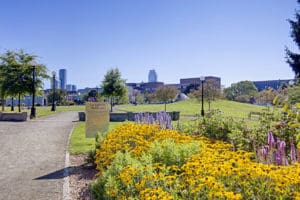
Cal Anderson Park is the central gathering space for the denser southern half of the neighborhood. It has a sunken reservoir, lit walking paths and a large fountain that draws crowds in summer. Sports fields and tennis courts sit at its southern edge, one block from Capitol Hill Station.
Farther north, Lake View Cemetery occupies a large tract next to Volunteer Park. Founded in 1872, it is the resting place of many of Seattle’s founders and remains a quiet, densely wooded area for walking.
Beyond the parks, living in Capitol Hill puts most things to do, including restaurants, music venues and events, along Pike/Pine, Broadway and 15th Ave East.
How Capitol Hill Compares to Nearby Neighborhoods
- Pioneer Square: For renters, this older district at the south end of downtown offers loft-style apartments in historic brick buildings and newer apartment buildings beside the stadiums, so game days bring crowds. Capitol Hill offers a wider range of building ages, Broadway’s grocery stores and more parks, and the light rail described above links the two.
- Central District: Across the hill’s southeast edge, it has more houses and townhouses, smaller scattered commercial pockets and less late-night activity. Because it borders the hill, it works as a calmer base with Pike/Pine still close by.
- Eastlake, Portage Bay and Montlake: Across the western and northern edges described earlier, these areas are quieter and more residential, with fewer shops.
- Downtown: Capitol Hill offers more homes and neighborhood retail and far fewer office towers.
- First Hill: The two share the First Hill/Capitol Hill Urban Center and run into each other along the disputed southern boundary described above.
- Fremont: Farther north across Lake Union, Fremont is often weighed against Capitol Hill on commute, since Capitol Hill has its own light rail station.
Choosing the Right Part of Capitol Hill
Start with what matters most to you:
- Nightlife at the door: Pike/Pine.
- A car-free commute: the blocks around the Broadway station.
- Quieter streets with neighborhood shops: 15th Ave East.
- A detached or historic house, a yard or a view: North Capitol Hill and Harvard-Belmont.
The house market moves much faster than the condo market. Redfin’s figures for the 90 days ending September 30, 2026 cover the whole hill, not individual areas:
- All homes: median sale price $944,685.
- Single-family: median $1,639,228 from only 20 sales; median 7 days on market; 102.1% of list price.
- Townhouse: median $975,000 from 21 sales; median 29 days on market; 99% of list price.
- Condo: median $470,000 from 32 sales; median 34 days on market; 96.3% of list price.
House buyers should be ready to move fast, while condo buyers have more room to negotiate. Townhouses fall in between.
Before buying a house, build these checks into the plan:
- Backyard cottage: Neighborhood Residential lots currently allow two accessory dwelling units, only one of them detached. The city has proposed loosening this, so confirm the current rule with the Seattle Department of Construction and Inspections (SDCI).
- Steep lots: Check the steep-slope layer (40% or greater incline) on SDCI’s GIS map before buying a view lot or planning work.
- Older houses: Ask whether there is a heating oil tank. Washington’s Pollution Liability Insurance Agency ended all registrations in its old insurance program on August 1, 2025, and now runs a loan and grant program.
- Landmark district: Exterior work needs the approval described in the Harvard-Belmont section.
The types of homes on Capitol Hill, from co-ops to landmark-district houses, carry different upkeep and ownership costs, so compare those along with price.
Frequently Asked Questions
Is It Easy to Commute from Capitol Hill Without a Car?
Yes. Link light rail connects the neighborhood directly to downtown, the stadium district and the airport. Protected bike lanes and the streetcar cover local trips.
What Is the Difference Between Pike/Pine and Broadway?
Pike/Pine is the nightlife district, packed with music venues and bars. Broadway is the daily errands street, with grocery stores, pharmacies and the light rail station.
What Types of Homes Are Available in the Harvard-Belmont Historic District?
Mostly large early 20th-century single-family homes and estates in Tudor, Colonial Revival and Victorian styles on expansive lots. Modern condo developments are largely absent.
Is Capitol Hill a Nice Neighborhood to Live In?
Its strengths are rail service, a walkable grid, three large green spaces and housing from condos to historic houses. The trade-offs are weekend noise in Pike/Pine, metered and permit parking, and a fast-moving house market.
Is Capitol Hill, Seattle Safe?
Conditions vary block by block, so check the Seattle Police Department’s Crime Dashboard for the streets around an address and visit at different times of day.
Can You Rent a Historic Home on Capitol Hill?
Most historic character for renters is in older brick apartment buildings and pre-1940 character buildings, such as those the Pike/Pine conservation rules aim to keep. The large historic houses around Volunteer Park and Harvard-Belmont mostly change hands as sales, so search current listings by building age.
Sources
- Redfin Data Center
- HistoryLink: Capitol Hill, Seattle
- City of Seattle: Capitol Hill Design Guidelines
- City of Seattle: Pike/Pine Conservation District SEPA Decision
- HistoryLink: Capitol Hill Station Opening
- Sound Transit: Capitol Hill Station Transit-Oriented Development
- SDOT: Updated Street Parking Rates, November 10, 2025
- Seattle Department of Neighborhoods: Harvard-Belmont Landmark District
- SDCI: ADU Code Updates Director’s Report
- SDCI: Environmentally Critical Areas
- Pollution Liability Insurance Agency: Heating Oil Program
- Seattle Police Department: Crime Dashboard