

Capitol Hill is one of Seattle’s most recognized neighborhoods – historic architecture sitting alongside a real estate market that moves faster than most buyers expect. Buyers evaluating the best neighborhoods in Capitol Hill often start their search here. If you’re looking for the most expensive areas in Capitol Hill, WA, you’ll find a mix of grand historic estates and modern luxury properties, not a single corridor where wealth concentrates cleanly. The neighborhood’s elevation puts many homes within sight of the mountains, Lake Washington, and the downtown Seattle skyline, and that geography shapes the price map considerably.
The overall median home sale price sits around $892,000, with homes spending roughly 26 days on the market. That blended number includes a high volume of condos, and single-family homes in the premier enclaves run higher. If you’re targeting the top tier, you need to focus on specific historic sections in the northern half – that’s where the estates are, and that’s where the real money lives.
Capitol Hill’s Priciest Pockets at a Glance
The luxury market here moves fast. Recent data shows a 98.99% sale-to-list ratio and about 4.5 months of supply – not a buyer’s market by any stretch. Inventory in the northern half leans toward expansive single-family estates rather than multi-family buildings, which is exactly why prices there don’t behave like the rest of the neighborhood.
Condos pull the overall median down. Strip those out, and single-family homes typically run between $1.1 million and $1.5 million. In the most exclusive pockets, that climbs considerably higher – partly because of the size and historical significance of the homes, and partly because historic properties rarely change hands. Scarcity does real work here.
Top Luxury Pockets and Median Prices
North Capitol Hill holds the highest concentration of wealth, specifically around the Millionaire’s Row pocket. Single-family homes sold there over the last six months carried a median price of roughly $1,975,000.
Other historically upscale pockets include Federal Avenue, just west of Volunteer Park, and the serpentine streets north of Aloha Street and west of Broadway.
What Defines a Top-Tier Area
Large lot sizes, strict historic preservation, and direct proximity to major green spaces – those are the three things that consistently separate the top blocks from everything else. The landmark designations and zoning on these streets prevent dense redevelopment, which is what keeps the estate-style feel intact.
With only 127 total homes recently available across all of Capitol Hill, inventory in these specific micro-neighborhoods is genuinely tight. When a well-preserved historic home comes to market, you don’t get the luxury of a slow decision.
Inside Capitol Hill’s Upscale Enclaves
Capitol Hill’s luxury real estate is inseparable from early Seattle history. The neighborhood was originally home to the city’s timber, shipping, and business elite, and their legacy didn’t disappear – it’s still standing on 14th Avenue East. These enclaves feel nothing like the busy commercial corridors further south. Wide, tree-lined streets and meticulously preserved historic properties define the highest-end blocks, and that distinction is immediately obvious when you drive through.
Millionaire’s Row
The primary named enclave is Millionaire’s Row – a specific stretch of 14th Avenue East running directly adjacent to and south of Volunteer Park. The defined corridor runs from East Prospect Street to either East Mercer Street or East Roy Street. It holds a spot on the National Register of Historic Places, which isn’t just a historical footnote; it’s a meaningful constraint on what owners can and can’t do with the property.
Home Styles and Current Prices
Standard single-family homes in the neighborhood range from $1.1 million to $1.5 million, but the estates on Millionaire’s Row reach well above that. Active listings in Capitol Hill recently peaked at $8.8 million.
You’ll find early 20th-century mansions, Tudor revivals, and classical estates – homes with extensive square footage and period details like grand staircases and original woodwork that simply aren’t replicated in new construction.
Historic Estates and Volunteer Park
Volunteer Park anchors the northern end of the neighborhood and functions as the defining landmark for these historic estates. Designed by the Olmsted Brothers, it’s a substantial green space. It houses the Volunteer Park Conservatory, the Seattle Asian Art Museum, and a historic water tower with an observation deck.
Homes near the park boundary carry a premium for that proximity. That’s not a coincidence.
What Defines an Upscale Area Here
Architecture tells part of the story, but it’s not the whole picture. Real estate data, income demographics, and neighborhood amenities all factor into where an area sits in the market. In Capitol Hill, the contrast between the commercial districts and the quiet residential streets is stark – the wealthiest sections are almost exclusively residential and protected by historic preservation rules.
Income and Home Value Benchmarks
Demographic data confirms the area’s affluence, though estimates vary by source. Point2Homes and Census data put the median household income at $143,248, with an average income of $229,477. Kurby AI cites a median household income of $161,926. Both figures sit well above the national average, which tracks with the cost of the local housing inventory.
Green Spaces and Architecture
Proximity to landscaped green space is a reliable wealth indicator in this market. Properties that border or have views of Volunteer Park are consistently among the most valuable in the city.
Historic preservation does real work maintaining those values too. The strict rules governing exterior modifications on streets like 14th Avenue East ensure the neighborhood’s grand aesthetic stays intact – and that’s not something money can easily replicate elsewhere.
Finding Luxury Homes in Capitol Hill, WA
The high-end market here is active. Roughly 87 homes sold recently across the neighborhood, and with an average of just 26 days on market, you don’t get long to think. Inventory is tight at every price point, but it’s especially unforgiving for historic properties that only become available once every few decades.
The Highest End of the Market
The ceiling stretches well into the multi-millions. Recent active listings hit $8.8 million, which represents the top end of the standard for-sale inventory. Historically, the neighborhood has seen higher – a 1910-built mansion at 814 E Highland Dr, featuring 11,000 square feet, five bedrooms, and mountain views, was previously listed for $15 million.
Historic Mansions and Modern Builds
The luxury segment is dominated by early 1900s mansions, not new construction. Buyers target these properties for large lots, mature landscaping, and Lake Washington views. Modern builds are less common in the historic districts, though some updated estates offer contemporary interiors behind preserved facades.
One practical note: work with inspectors who are familiar with early 20th-century plumbing and electrical systems when you’re evaluating these homes. It matters.
Matching an Enclave to Your Routine
The northern and southern ends of Capitol Hill feel like entirely distinct markets. That’s worth sitting with before you start making offers. Your commute, your appetite for quiet streets, and how often you want to walk to dinner are all real factors in which specific block makes sense for you. The highest price tags generally track with the lowest housing density.
Proximity to Parks and Recreation
If outdoor space is the priority, focus on the blocks immediately surrounding Volunteer Park. The streets north of Aloha Street put you within easy reach of the conservatory and walking paths, with a quieter, more residential character than the rest of the neighborhood. The large, private lots give you room to use your yard.
Access to Commuter Routes and Dining
If a shorter walk to restaurants and transit matters more, look slightly further south or west toward Broadway. You’re still in upscale territory, but you’re closer to the neighborhood’s commercial core – light rail access, dining, the daily conveniences. The trade-off is smaller lot sizes and more street traffic. That’s the honest version of it.
Quieter Streets and Walkable Amenities
Federal Avenue, west of Volunteer Park, offers a balance of quiet residential living and architectural beauty. It stays walkable to the park while keeping a comfortable distance from the busiest thoroughfares. For buyers who want a slower pace without leaving the city center, it’s worth a close look.
Livability and Crime Rates in the Area
Capitol Hill is a dense, urban environment, and its crime data reflects that reality. The neighborhood’s overall crime index is 149 – 49% above the national average and 40% higher than Seattle’s citywide average. Larceny and theft are the most elevated crime types, with an index of 161.
Crime Statistics and Geography
Crime isn’t distributed evenly across the neighborhood. The northeast part of Capitol Hill is consistently identified as the safest section, with markedly lower burglary, property-crime, and violent-crime rates than the southern and southwestern sections. Nationally, the neighborhood ranks in the 1st percentile for burglary safety, and the violent crime rate runs about 8.2 per 1,000 residents annually.
Cost of Living Context
Housing drives the cost of living here. With a median sale price approaching $892,000 and luxury homes easily exceeding $2 million, you need a substantial budget before you start. Everyday expenses reflect the area’s affluent demographic as well. The median household income of roughly $143,248 to $161,926 helps residents absorb those premium costs, but there’s no version of this market that’s inexpensive.
Mapping the Upscale Sections
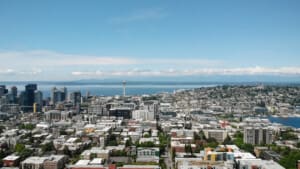
Capitol Hill sits on a prominent hill just east of downtown Seattle, and the varied topography matters when you’re trying to understand the price map. Luxury real estate concentrates in the northern half, bounded by historic designations and major park spaces.
Boundaries of Millionaire’s Row
Millionaire’s Row is the most strictly defined upscale pocket. It runs along 14th Avenue East, starting at East Prospect Street in the north, with the southern boundary ending at either East Mercer Street or East Roy Street. Grand, preserved estates and wide setbacks make this corridor immediately identifiable – you’ll know it when you’re on it.
Proximity to Downtown and Landmarks
Volunteer Park sits at the edge of Capitol Hill and serves as the navigational anchor for the northern enclaves. The proximity to downtown is real – residents can get to the city center without a long commute, then return to a quiet, historic residential street. That combination is a significant part of what the premium buys you.
Frequently Asked Questions
What is the richest part of Capitol Hill, WA?
The richest part of the neighborhood is North Capitol Hill, specifically the Millionaire’s Row area. Single-family homes in this historic pocket recently carried a median sale price of roughly $1,975,000. It’s located just south of Volunteer Park along 14th Avenue East.
Is Capitol Hill, WA a wealthy area?
Yes, it’s one of Seattle’s more affluent neighborhoods. The median household income is estimated between $143,248 and $161,926, and single-family homes typically range from $1.1 million to $1.5 million.
What is the most expensive house in Capitol Hill, WA?
Active luxury listings recently reached up to $8.8 million. Historically, a 1910-built mansion with 11,000 square feet on East Highland Drive was listed for $15 million, making it one of the most expensive homes in the area.
Is Capitol Hill a good place to live?
It’s a desirable area known for its historic architecture, proximity to downtown Seattle, and access to Volunteer Park. You should weigh those amenities against the urban environment, which carries a crime index 40% higher than the citywide average.
What are the safest areas in Capitol Hill?
The northeast part of Capitol Hill is consistently identified as the safest section. Crime-data analysts note that this area has markedly lower rates of burglary, property crime, and violent crime compared to the southern and southwestern parts of the neighborhood.
How competitive is the luxury real estate market in Capitol Hill, WA?
It’s quite active. Homes average about 26 days on the market, sellers recently received an average of 98.99% of their list price, and the neighborhood maintains roughly 4.5 months of housing supply.
What drives property values in North Capitol Hill?
The high prices are driven by a concentration of historic estates and strict preservation rules that prevent dense redevelopment. Buyers evaluating the North Capitol Hill housing market will find that scarcity plays a major role in these valuations. Properties here rarely change hands, keeping inventory tight and prices elevated.
What defines the eastern residential blocks of the neighborhood?
The eastern side of the area is known for its quiet residential streets and meticulously preserved historic properties. Buyers evaluating East Capitol Hill will find large single-family homes along tree-lined avenues like 14th Avenue East. These blocks feel entirely distinct from the busy commercial districts located further south.