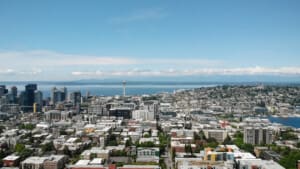


Capitol Hill sits just east of downtown Seattle in King County, right on the doorstep of the city’s central business district. Buyers who end up in these Capitol Hill, WA zip codes tend to care about two things above everything else: location and transit access. This neighborhood delivers on both.
The market moves fast. Homes are spending roughly 21 days on the market before going under contract, and as of late 2026, the median sale price sits at approximately $792,000 – with properties closing at nearly their full list price. You don’t have a lot of time to think things over here.
Geographic Boundaries and Regional Context
Capitol Hill holds a central position within Seattle, with distinct neighborhoods on every side. To the south it meets First Hill and the Central District. The eastern edge borders Madison Valley and Broadmoor. Head north and the neighborhood transitions into Montlake and Portage Bay.
The western boundary is Interstate 5, which is what separates Capitol Hill from Eastlake, South Lake Union, and Downtown Seattle. That placement is the whole story, really – you’re close to major employment centers and regional transit corridors without actually being in the middle of them.
Proximity to Airports and Regional Hubs
Seattle-Tacoma International Airport (SEA) is the nearest major commercial hub, about 15 miles south. King County International Airport – Boeing Field – is roughly eight miles away, though commercial service there is limited. If you need seaplane travel, Kenmore Air Harbor Seaplane Base is just two miles from the area.
Commute Times and Transit Routes
Capitol Hill is 1.5 to 2.1 miles east of downtown Seattle. Broadway, one of the neighborhood’s main thoroughfares, is about a mile from the downtown retail core – that’s a 10 to 20 minute drive depending on traffic conditions, which in Seattle is doing a lot of work in that sentence.
The neighborhood’s highway access is straightforward. Interstate 5 runs right along the western edge. State Route 520 forms the northern border, connecting I-5 to the Eastside via the Evergreen Point Floating Bridge. Interstate 90 is accessible just to the south for additional Eastside connections.
Public Transportation Options
The underground Capitol Hill Link light rail station on Broadway anchors the transit picture here. That station connects to both the 1 Line and 2 Line for north-south and Eastside travel – which is genuinely useful, not just a bullet point on a listing.
The First Hill Streetcar terminates on Broadway at Denny Way, and King County Metro runs a serious number of bus routes through the neighborhood: routes 3, 8, 9, 10, 11, 43, 49, 60, and the C Line. If you don’t own a car here, you’re not suffering for it.
Real Estate Market Conditions
As of mid-2026, the median sale price in Capitol Hill is roughly $792,000. Properties are selling at approximately 99 percent of their listing price, which tells you this isn’t a market where buyers have much room to negotiate.
Inventory sits at about 110 available homes – translating to 3.5 months of supply. With 95 homes sold in a recent tracking period and a median time on market of just 21 days, you need to be ready to move. Not “I’ll think about it over the weekend” ready. Actually ready.
Frequently Asked Questions
What are the exact neighborhood boundaries of Capitol Hill in Seattle, WA?
Capitol Hill is framed by Montlake and Portage Bay to the north, and First Hill and the Central District to the south. The eastern edge borders Madison Valley and Broadmoor, while the western boundary runs along Interstate 5, separating it from Eastlake, South Lake Union, and Downtown Seattle.
How long does it take to commute from Capitol Hill to downtown Seattle and South Lake Union?
Driving to downtown Seattle from Capitol Hill typically takes 10 to 20 minutes. The neighborhood is 1.5 to 2.1 miles east of downtown, with South Lake Union located immediately across Interstate 5 on the western border.
How accessible is public transit and the Link Light Rail for Capitol Hill residents?
Transit access is extensive, centered around the underground Capitol Hill Link light rail station on Broadway. You can also use the First Hill Streetcar or connect to multiple King County Metro bus routes, including the C Line and route 49.