
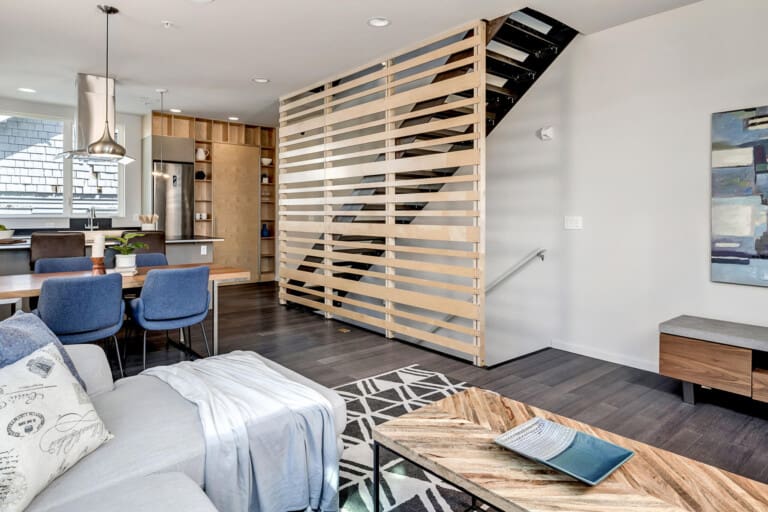

The overall median sale price for anyone buying a home in Capitol Hill sits at approximately $892,000 across all property types. Homes here are moving quickly – roughly 26 days on the market before going under contract. With about 127 active listings recently recorded, buyers have a real mix of housing styles to sort through.
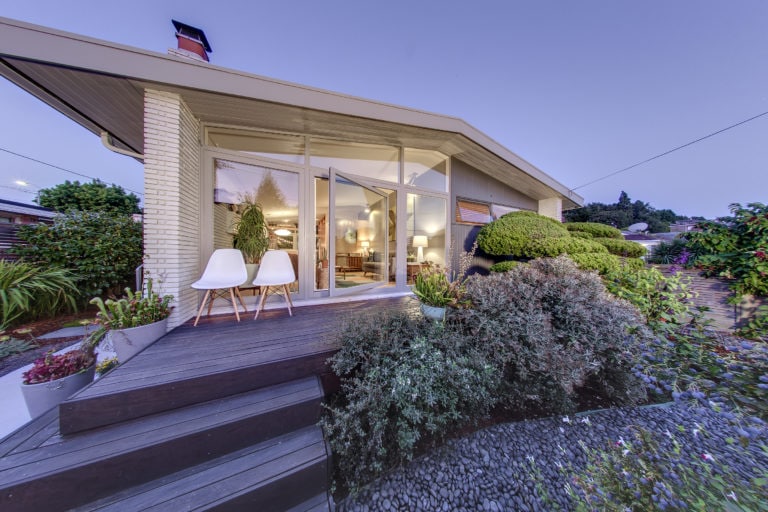
What makes Capitol Hill’s market distinctive is how little of that inventory is traditional single-family. Most of what you’ll find are condominiums, townhomes, and multi-family structures. The range runs from historic lofts to modern high-rises, and the layout is dense enough that understanding which property type fits your situation matters before you start scheduling tours.
Condo Prices and Market Trends
The condo segment gives you a very different entry point than the neighborhood’s $892,000 overall median. Active condo listings are hovering around a median of $413,000, with typical sale prices falling between $445,000 and $700,000 depending on the building’s age and the unit’s square footage.
Washington’s statewide housing market is showing signs of stabilization in 2026. The statewide median home price is around $625,000, with condos averaging roughly $450,000. In the Seattle area specifically, condo price growth has moderated compared to the peaks of 2020 through 2022 – which means buyers have a bit more room to negotiate than they did a few years back.
Current Condo Pricing in Capitol Hill
At any given time, you’ll see about 54 active condo units in Capitol Hill. Recent figures show 90 condos selling in a single month alongside houses and townhomes. These units are averaging about 59 days on the market and typically draw at least one offer.
Statewide and Local Housing Adjustments
Rising mortgage rates and an increasing supply of new construction from recent years are cooling rapid price appreciation. New listings are entering active inventory with more regularity, and the statewide picture reflects a more balanced environment for buying attached properties in 2026.
Understanding HOA Fees and Coverage
Monthly HOA dues are part of the deal when you buy a condo in Seattle – full stop. For Capitol Hill, expect fees somewhere between $500 and $900 per month. Some older buildings and luxury towers push past $900 depending on their amenities and reserve funding.
A reasonable local rule of thumb is $0.60 to $0.90 per square foot. That’s not a ceiling – it’s a starting point for your estimates. What matters most is that lenders will count these dues against your monthly debt-to-income ratio, so factor them in early, not after you’ve fallen in love with a unit.
What Your Monthly Dues Pay For
Association fees typically cover exterior building maintenance, the master insurance policy, and common area upkeep. Many associations bundle in water, sewer, and garbage as well. Buildings with elevators, secure parking, or fitness centers charge more because those systems cost more to maintain – straightforward math.
Evaluating the Association’s Health
Before you close, request the association’s reserve study and recent meeting minutes. A well-funded reserve is what stands between you and a surprise special assessment when the roof needs replacing. Lenders will review these documents too, since a poorly run association can affect your financing options.
Condominium Communities and Sub-Areas
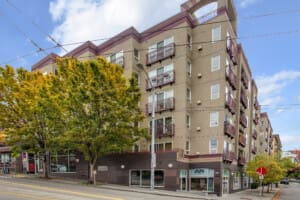
Capitol Hill has one of the largest concentrations of condo buildings anywhere in Seattle. A citywide database tracks about 17 prominent complexes in this neighborhood alone, and the housing stock shifts noticeably from block to block.
The Pike/Pine corridor and Broadway put you close to transit and commercial activity. North Capitol Hill runs quieter, with older architecture and a more residential feel. Most buyers come in with a specific pocket of the neighborhood already in mind, and that often drives them toward particular buildings before they’ve even looked at a floorplan.
Options in North Capitol Hill and Pike/Pine
Pike/Pine is where you’ll find converted spaces and newer developments oriented toward urban living. North Capitol Hill leans toward mid-century brick buildings and smaller complexes. Commuters frequently target locations near the light rail station on Broadway, and inventory near that stop tends to move faster.
Historic Lofts and Named Towers
The neighborhood has some genuinely distinctive buildings worth knowing by name. Firehouse 25 is one historic property buyers ask about regularly. You’ll also find units in Republican Court, Palermo, The Lamplighter, Monique Lofts, and Trace Lofts. Other notable complexes include 1310 E Union, the Highlander, 1111 E. Pike, Mode, The Shannon, Press, Garden Court, Sheffield, and Twin Gables.
Parks, Views, and Luxury Properties
Where your unit sits within Capitol Hill has a direct effect on price. Condos near major green spaces or on elevated ridges carry a premium, and units with sightlines toward the water or the downtown Seattle skyline are priced accordingly.
The luxury end of the market here covers both modern new construction and penthouses in established towers. Private outdoor spaces, floor-to-ceiling windows, dedicated parking – those are the features that push prices toward the upper bounds of the $700,000 typical sale range, and sometimes beyond it.
Condos Near Volunteer and Cal Anderson Parks
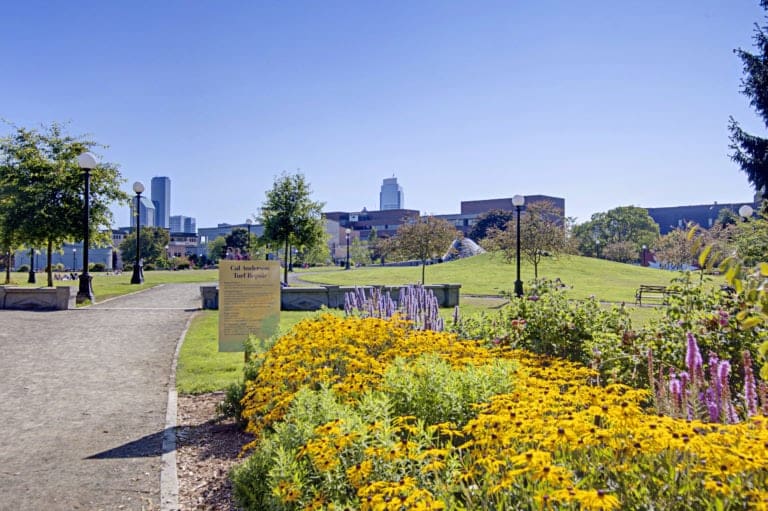
Units bordering Volunteer Park or Cal Anderson Park don’t sit long. The views into those parks are protected from future development, which is part of what buyers are paying for. If outdoor recreation matters to you and you want it right outside the lobby, these are the locations worth prioritizing.
High-End and New-Construction Units
New-construction condos are scattered throughout the neighborhood for buyers who want modern amenities. Some western-facing buildings have clear views of Lake Union. Expect high-end finishes, energy-efficient systems, and premium association amenities in these units.
Townhomes, Duplexes, and Multi-Family Options
Condominiums get most of the attention in Capitol Hill, but the market also carries a solid inventory of townhouses and multi-family structures. Townhomes split the difference between a condo and a single-family house – multiple stories, private entrances, and sometimes a small yard or rooftop deck.
Duplexes and smaller multi-family buildings offer a different kind of opportunity. Some buyers choose to live in one unit and rent the other to offset mortgage costs. These property types often come without the extensive shared amenities of a large condo tower, which can mean lower HOA dues or none at all.
Attached Townhouses
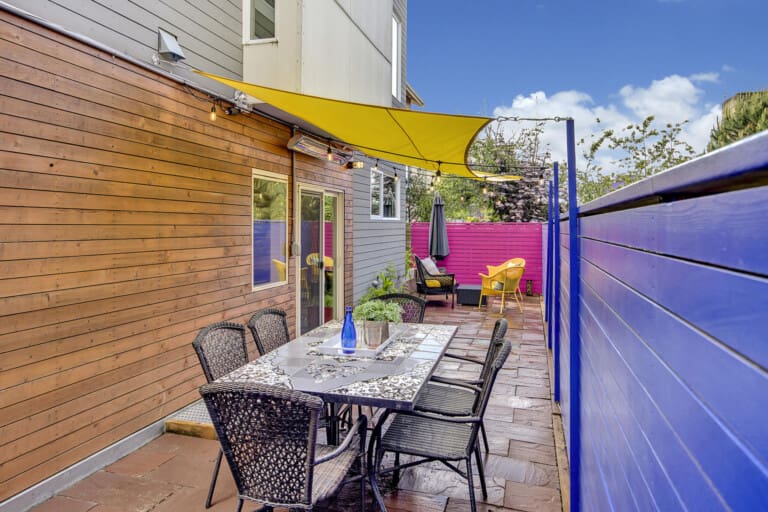
Townhouses in Capitol Hill tend toward modern, box-like architecture – large windows, rooftop terraces, clean lines. Sharing only one or two walls with neighbors gives you more privacy than a typical apartment-style condo. That said, verify whether a townhome community has a governing association or shared maintenance agreements before you assume you’re free of HOA obligations.
Duplexes and Co-Ops
Co-ops do exist in some of the older brick buildings, though they’re less common than condos. In a co-op, you’re buying shares in a corporation rather than owning the real estate directly – and that requires specialized financing. Duplexes remain a consistent target for buyers interested in multi-generational living or rental income.
Affordability and Living Costs
Capitol Hill’s cost-of-living index is 180 against a national average of 100. That translates to everyday expenses running about 44% to 50% above the typical U.S. baseline. That’s not a reason to walk away, but it’s a number you need to know before you build your budget.
Property taxes are part of that picture. King County property taxes – which apply to Capitol Hill – hover around 1% of assessed property value annually. Stack that on top of monthly HOA dues and you’ll see why running a full cost-of-ownership estimate matters more here than in most markets.
First-Time Buyers and Downsizers
The $413,000 median listing price for condos opens a real door for first-time buyers who are priced out of single-family homes. Downsizers come here to shed exterior maintenance responsibilities. Urban professionals buy here to cut commute times to downtown Seattle. It draws different types of buyers for different reasons, but the math tends to work similarly for all of them.
Comparing Purchasing to Renting
Locking in a mortgage payment gives you stability that a lease doesn’t. Upfront costs and taxes require capital, but buyers build equity over time instead of absorbing rent increases. If you’re a renter thinking about making the jump, run the numbers on current interest rates and HOA fees against your monthly lease – that comparison will tell you more than any general rule of thumb will.
Frequently Asked Questions
How much do condos cost in Capitol Hill, WA?
Current active condo listings in Capitol Hill sit at a median price of $413,000. Typical sale prices range from $445,000 to $700,000 depending on the building and unit size. The overall median sale price for all home types in the neighborhood is approximately $892,000.
What are typical HOA fees for condos in Capitol Hill?
Monthly HOA dues generally range from $500 to $900. A good local estimate is $0.60 to $0.90 per square foot. Buildings with extensive amenities or older infrastructure may charge over $900 per month.
Are condos in Capitol Hill a good investment?
It depends on your timeline and goals. The Seattle-area condo market has moderated from the rapid gains of 2020 through 2022, stabilizing price growth. Buying a condo here offers a chance to build equity in a high-demand neighborhood, though buyers should evaluate individual building health and reserve funds.
Can I buy a condo in Capitol Hill directly from the owner (FSBO)?
Yes, you can purchase a condo directly from an owner in Capitol Hill. For-sale-by-owner transactions require the same due diligence, including reviewing HOA documents and title reports. Buyers pursuing FSBO properties should consider hiring an attorney or agent to handle the contracts.
Should I buy a condo or a townhome in Capitol Hill, WA?
It depends on your budget and preference for privacy. Condos typically have lower purchase prices and handle all exterior maintenance, but come with higher HOA fees and shared hallways. Townhomes offer private entrances and often private outdoor spaces, though they may carry higher purchase prices.
Which condo buildings in Capitol Hill offer the best views or parkside access?
Buildings bordering Volunteer Park and Cal Anderson Park offer immediate green space access. For water views, buyers should look for western-facing units that overlook Lake Union. Specific sightlines vary greatly by floor height and surrounding development.
Are there rental cap restrictions for condos in Capitol Hill, WA?
It depends on the specific building. Many condo associations enforce rental caps that limit the percentage of units that can be leased out at one time. Buyers planning to rent their unit out in the future must review the HOA bylaws to confirm the building’s current rental ratio and rules.