

Seattle gives buyers real options in both price and how you actually want to live. Capitol Hill and Fremont are two of the most recognized areas in King County, and they pull in very different directions: one dense and rail-connected, the other lower-key and water-adjacent. Buyers often compare the pros and cons of living in Capitol Hill with Fremont’s lifestyle. If you’re weighing a Capitol Hill (Seattle), WA vs. Fremont, Seattle purchase, the decision usually comes down to what kind of housing you want and how you plan to get to work.
Comparing the Real Estate Markets
These two neighborhoods are not interchangeable on price. As of mid-2026, Capitol Hill carries roughly 110 active listings with a median sale price of around $792,000 – a figure pulled down considerably by the volume of condo sales. Standalone single-family homes in Capitol Hill trade between $1.1 million and $1.5 million, which is a different conversation entirely.
Fremont sits higher on the median. Its median home value runs closer to $895,000, and some 2026 listings push median asking prices between $912,000 and $950,000. That reflects a market tilted more toward detached homes and townhouses, where the floor is higher from the start.
Capitol Hill Housing Market
The pace here is steady. Homes sell in roughly 21 days on the market, and recent data shows about 95 homes sold in a single month – consistent enough that buyers can plan around it. Condos in the $445,000 to $700,000 range move reliably throughout the year, so if you find something properly priced, don’t assume you have time to think it over for a week.
Fremont Housing Market
Fremont is smaller and harder to read. Active listing counts swing around considerably – some sources report 58 active listings while others note seasonal spikes up to 230 homes. Days on the market range from 9 to 45 depending on property type and time of year. A well-priced home can disappear fast; others sit for over a month. You need to watch this market closely rather than assume a pattern holds.
Available Housing Types and Architecture
The physical product differs sharply between these two neighborhoods, and that alone can make the decision for some buyers. Capitol Hill runs dense – mid-rises, condos, multi-unit buildings. Fremont has more breathing room and a wider mix of property types.
Know what you’re looking for before you start touring. If you want a modern high-rise unit, Capitol Hill is where you’ll find it. If you want a bungalow with a yard, you’re heading to Fremont.
Condos and Historic Homes in Capitol Hill
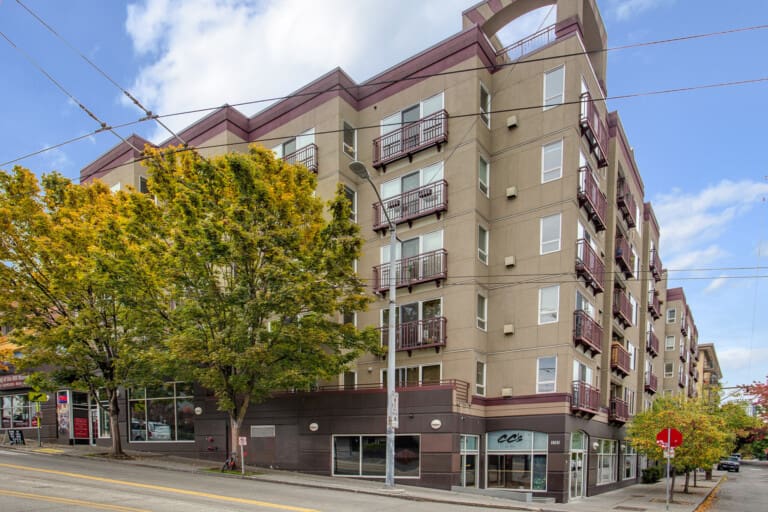
Mid-rise apartment buildings and modern condo developments account for the majority of Capitol Hill’s sales volume and housing footprint. That’s what the neighborhood is built around, and the inventory reflects it.
Historic single-family homes and townhomes exist here too, but they’re secondary. Less common, more competitive when they do hit the market – available for buyers who want older architecture without leaving a dense urban environment.
Townhomes and Single-Family Homes in Fremont
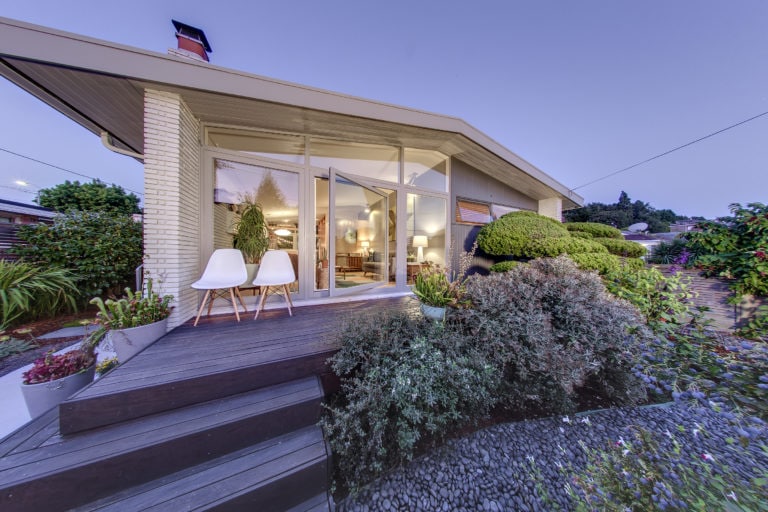
Fremont’s housing stock is genuinely varied: craftsman bungalows, converted industrial buildings, and newer condos all coexist within a few blocks of each other. Single-family homes and townhomes make up a larger share of the market here than in Capitol Hill. Residential streets blend directly into commercial zones, and the sidewalks and bike lanes make it work.
Local Amenities and Daily Life
Capitol Hill puts retail and restaurants right outside your door. Commercial activity centers on the Pike and Broadway corridors – dense, walkable, and immediately accessible from most condo buildings in the area.
Fremont is a different tempo. It sits along the water, with direct access to the Burke-Gilman Trail and Lake Union shaping daily life for residents who mix outdoor time with local errands.
Dining and Retail in Capitol Hill
Broadway is the main spine – retail, dining, condos, all layered together along one corridor. Pike Street adds nightlife and entertainment. Parks are scattered throughout, which keeps the density from feeling relentless.
Parks and Trails in Fremont
The Burke-Gilman Trail is the connective tissue here, running along the water and linking Fremont to other parts of the city without putting you on a main road. Lake Union sits nearby, adding another layer of outdoor access. You can walk from a craftsman on a residential street to the waterfront without much effort – that proximity is part of what defines the neighborhood.
Commuting and Transportation Options
This is where the two neighborhoods diverge most clearly for a lot of buyers. Capitol Hill has its own Link light rail station – a fixed, congestion-proof route to downtown Seattle in minutes. That’s a significant asset if you’re working downtown and don’t want to own a car or fight traffic.
Fremont gets around differently. Bus routes, biking, and walking carry most residents, and the neighborhood’s position near major employment hubs makes those alternatives genuinely viable rather than aspirational.
Transit Options in Capitol Hill
The Capitol Hill light rail station bypasses street-level traffic entirely. Residents reach downtown Seattle quickly and reliably, and South Lake Union is also accessible via transit or a short drive. Buyers who work in either of those areas consistently prioritize this neighborhood for exactly that reason.
Getting Around Fremont
Fremont is walkable and bike-friendly in a practical sense, not just a marketing sense – particularly for anyone working at the Adobe and Google offices located within the neighborhood itself. For drivers, the numbers are straightforward: roughly a 10-minute drive to South Lake Union and a 15-minute drive to downtown. The Burke-Gilman Trail handles bicycle commuting to various parts of the city for those who’d rather ride.
Frequently Asked Questions
How do median home prices in Capitol Hill, Seattle compare to those in Fremont?
Fremont runs higher for the median buyer. Capitol Hill’s median sale price sits around $792,000, weighted down by a large volume of more affordable condos. Fremont’s median home value is closer to $895,000.
Will I find more single-family homes or condos when house hunting in Capitol Hill versus Fremont?
Capitol Hill is dominated by apartments and modern condominiums. Fremont offers a wider mix – craftsman bungalows, townhomes, and converted industrial buildings make up a larger share of the market there.
Is Capitol Hill or Fremont better for buyers looking for a walkable neighborhood with active nightlife?
Capitol Hill. Dense retail and nightlife corridors along Pike and Broadway define the neighborhood’s commercial life. Fremont’s walkability points in a different direction – toward parks, tech campuses, and the Burke-Gilman Trail.
How does the daily commute to downtown Seattle and South Lake Union differ between Capitol Hill and Fremont?
Capitol Hill has a dedicated Link light rail station that reaches downtown in minutes – no traffic involved. Fremont residents typically drive, which runs about 10 minutes to South Lake Union and 15 minutes to downtown, or commute by bicycle via the Burke-Gilman Trail.
Do real estate listings typically sell faster in Capitol Hill or Fremont?
Capitol Hill is more consistent – homes sell in roughly 21 days on the market. Fremont is smaller and more volatile, with days on the market ranging anywhere from 9 to 45 depending on the property and the season.
How difficult is it to find homes with dedicated parking in Capitol Hill compared to Fremont?
It depends on the property type. Capitol Hill’s mid-rise apartments and condominiums vary on parking. Fremont’s larger share of single-family craftsman bungalows and townhomes tends to offer more options, but it still comes down to the specific property.