

The median home price in Capitol Hill sits around $792,000 as of mid-2026, while Downtown Seattle properties average closer to $580,000 based on late 2025 figures. If you’re comparing the pros and cons of living in Capitol Hill versus Downtown Seattle, you’re really weighing two different ways to live in the city – not just two price points.
One is a high-rise condominium environment. The other is a genuine neighborhood mix of single-family houses, townhomes, and low-rise condos. Both put you within easy reach of major Puget Sound employment centers, but the day-to-day experience is pretty different.
Comparing Home Prices and Property Types
The days-on-market gap alone tells you a lot. Capitol Hill homes are selling in a median of 21 days per recent MLS data. Downtown Seattle properties are averaging about 51 days. That’s not a small difference, and it shapes how you’ll need to approach each market.
Capitol Hill’s $792,000 median is a blend. Single-family homes there run between $1.1 million and $1.5 million, and it’s the lower-priced condominiums pulling that overall figure down. Downtown’s median of roughly $580,000 reflects something simpler: the inventory is almost entirely condominiums. If you want a detached house, you won’t find it in the central business district.
Condos and High-Rises in Downtown Seattle
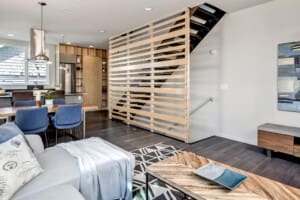
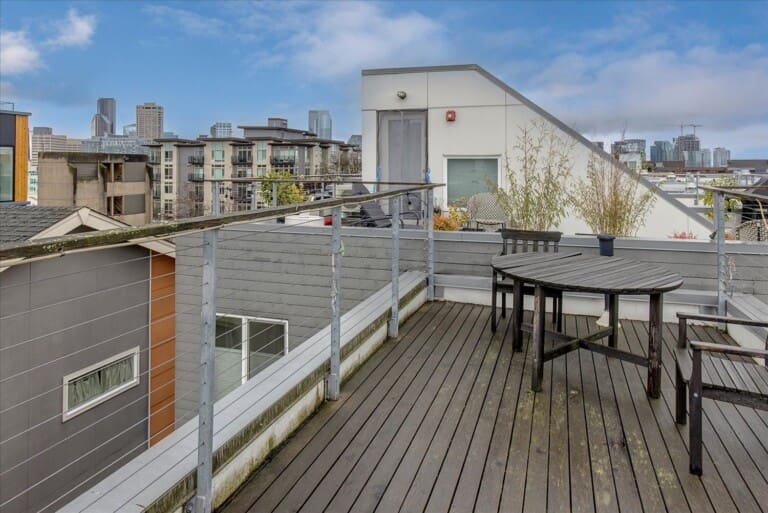
Downtown Seattle is dense with high-rise condominium buildings, and many of them come loaded with amenities – fitness centers, concierge services, secure parking garages. That’s part of the appeal.
It also means HOA dues. Before you fall in love with a unit’s monthly payment, make sure you know what the association fees add to it. Those costs cover exterior maintenance and shared facilities, but they’re real money on top of your mortgage every month.
Single-Family Homes and Townhouses in Capitol Hill
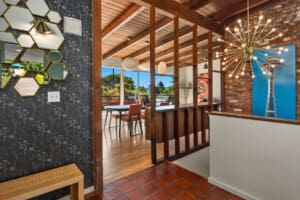
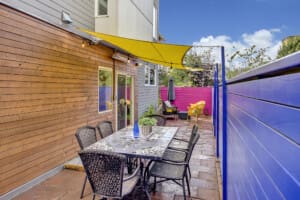
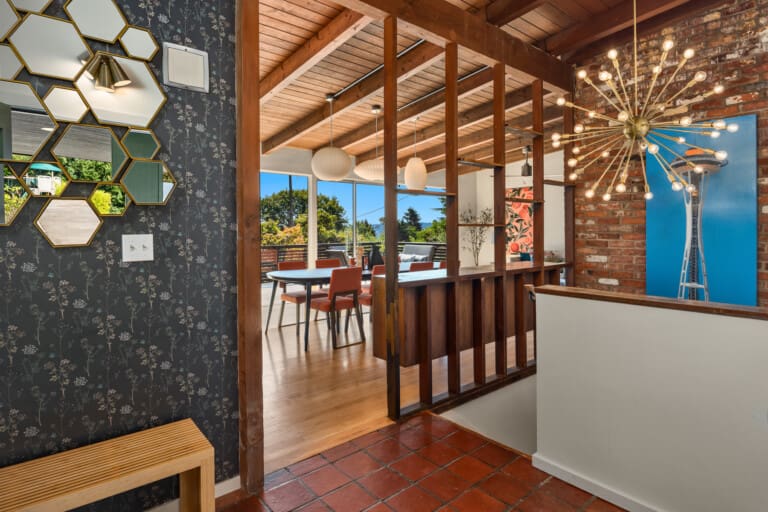
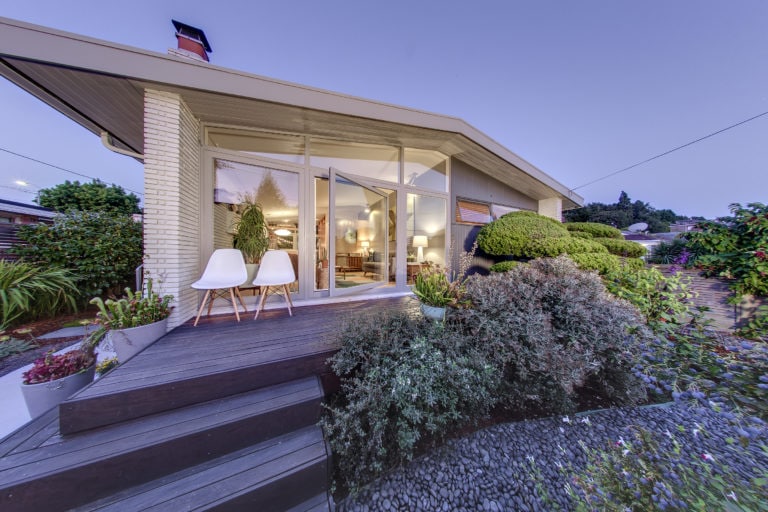
Capitol Hill has actual architectural variety – historic early-20th-century houses, modern townhouse developments, tree-lined residential streets sitting alongside denser apartment and condo buildings. It doesn’t feel like one thing.
With roughly 110 active listings in mid-2026 and just 3.5 months of supply, this is a seller’s market. Homes here move about a month faster than they do downtown. If Capitol Hill is where you want to be, get your financing sorted before you start touring, not after.
Parks, Transit, and Daily Amenities
Capitol Hill has large hillside parks. Downtown leans on smaller urban plazas and waterfront spaces. Both connect directly to the regional transit network, though they connect differently.
The Capitol Hill Link light rail station sits just southeast of Cal Anderson Park and gives you a direct shot into the downtown core in only a few minutes. Downtown, meanwhile, is the hub – Westlake, University Street/Symphony, Pioneer Square, and International District/Chinatown stations are all there, along with immediate access to major bus lines and regional connections.
Green Space and Parks
Volunteer Park is the anchor for Capitol Hill outdoor life – 50 acres designed by the Olmsted Brothers, home to the Seattle Asian Art Museum and a botanical conservatory. That’s not nothing.
Beyond Volunteer Park, you’ve got Cal Anderson Park, Interlaken Park, Louisa Boren Park, and smaller spots like Broadway Hill and Tashkent Park. Downtown’s options are more limited: Myrtle Edwards Park, Waterfront Park, Occidental Square, and the grounds around Seattle Center. Usable, but a different scale.
Entertainment and Museum Access
Downtown has Pike Place Market and the Seattle Art Museum. Capitol Hill has a dense run of independent restaurants, live music venues, and theaters along its main commercial corridors. If you’re in one neighborhood and want the other’s offerings, the light rail handles that in minutes – this isn’t a trade-off that costs you much.
Finding Reliable Neighborhood Data
If you’re researching King County real estate, go to the official sources. Municipal data is where you get accurate details on zoning and public services – not third-party summaries.
The Seattle Police Department maintains an online crime dashboard with block-level filtering. You can use it to look at specific streets and review the crime rate in Capitol Hill or Downtown Seattle rather than relying on neighborhood-wide averages. For broader context, cross-reference with data from the King County Sheriff’s Office and the FBI’s Uniform Crime Reporting program. That combination gives you a factual picture rather than an impressionistic one.
Making Your Real Estate Decision
Here’s the short version. Capitol Hill gives you a mix of detached homes and condos at a median near $792,000, a competitive market, and a genuine residential feel. Downtown Seattle gives you a high-rise condominium market at a median around $580,000, more time to evaluate before you have to decide, and immediate access to multiple transit lines and building amenities.
If you want single-family homes, townhouses, or serious park space, Capitol Hill is where to look – just know that 21-day median means you don’t have the luxury of taking your time. If the priority is transit access, high-rise amenities, and a slower market pace, downtown makes more sense. Neither is wrong. They’re just different.
Frequently Asked Questions
Is it more expensive to buy a condo in Capitol Hill (Seattle), WA or Downtown Seattle?
It depends on the specific building and amenities. Capitol Hill’s overall median of $792,000 is higher than Downtown Seattle’s $580,000, but that median is pulled up by single-family homes priced over $1.1 million. Condos in both areas can land at comparable price points depending on age and square footage.
Are there more single-family homes for sale in Capitol Hill (Seattle), WA compared to Downtown?
Yes. Capitol Hill has a mix of high-priced single-family homes, townhouses, and low-rise condos. Downtown Seattle’s inventory is almost entirely high-rise condominiums and apartments.
Do properties in Capitol Hill (Seattle), WA generally have better resale value than Downtown Seattle condos?
It depends on the property type, but Capitol Hill homes are currently selling faster and closer to list price. In mid-2026, Capitol Hill properties spent a median of 21 days on the market with an average 99% sale-to-list ratio, compared to an average of 51 days on market for Downtown Seattle homes.
How easy is the daily commute from Capitol Hill (Seattle), WA to the Downtown business district?
Very fast. The Capitol Hill Link light rail station, located near Cal Anderson Park, connects directly to multiple downtown stations. Travel between the two neighborhoods via light rail takes only a few minutes.
Is Capitol Hill (Seattle), WA more walkable and residential than living directly in Downtown Seattle?
Yes. Capitol Hill has a traditional residential layout – tree-lined streets, townhouses, hillside parks like Volunteer Park and Interlaken Park. Downtown Seattle is a dense commercial hub with high-rises and limited green space.
What are the biggest noise or parking drawbacks when buying a home in Capitol Hill (Seattle), WA versus Downtown?
Both areas deal with urban noise and tight street parking. Downtown condo owners typically rely on secure building garages. Capitol Hill residents without a dedicated driveway on their single-family home or townhouse will be competing for street parking – worth factoring in before you fall for a place that doesn’t have one.