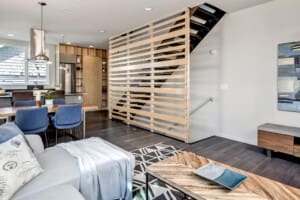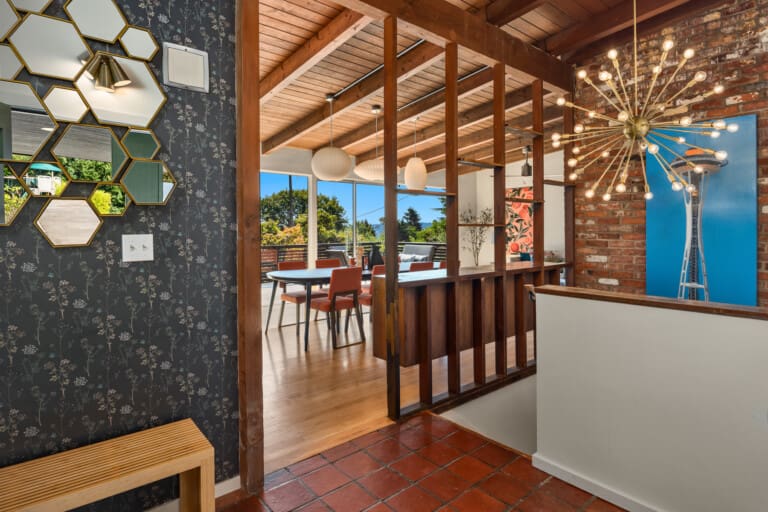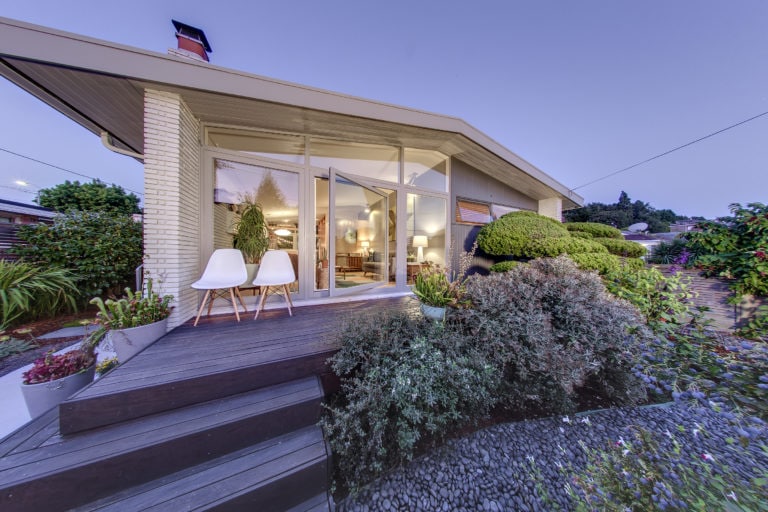


If you are preparing to sell your home in Capitol Hill, Seattle, the median sale price sits around $892,000 as of late 2026. Inventory is hovering around 127 available homes, and properties are spending roughly 26 days on the market – which means buyers have real choices. When they have choices, your listing needs a reason to stand out against everything else in the Seattle metro area.
Home staging – rearranging furniture, adjusting lighting, decluttering – is how you give it one. A well-prepared listing tends to close smoother and stronger than one that hits the market without any prep work.
Why Home Staging Pays Off for Capitol Hill Sellers
The numbers here are pretty straightforward. The 2025 National Association of Realtors (NAR) Profile of Home Staging found that 49% of sellers’ agents reported staging reduced a property’s time on the market. Another 30% of agents in that same survey said staging boosted offer values by 1% to 10%.
Buyers in the Seattle metro area are looking for move-in-ready spaces. Proper preparation removes the distractions – the cluttered counters, the odd furniture arrangement – and lets the home’s actual architecture do the talking.
How Staging Affects Time on Market and Offer Value
Properties that look finished attract more immediate interest from buyers browsing online. And when a buyer walks in and the place already feels put-together, they’re less likely to hunt for flaws or ask for repair credits during the inspection.
Capitol Hill homes are currently selling for about 99% of list price on average, with nearly 18% of recent local sales closing above asking. Strong visual presentation is part of what generates those competitive offers.
Helping Buyers Visualize the Space
Empty rooms or heavily personalized spaces make it genuinely hard for buyers to picture their own lives there. The 2025 NAR survey found that 83% of buyers’ agents felt staging made it easier for buyers to visualize the property as their future home.
That matters especially in older Capitol Hill houses with unconventional layouts. A well-placed furniture arrangement shows a buyer exactly how a small alcove or an open-concept floor plan actually functions day to day – something an empty room simply can’t do.
Typical Home Staging Costs in Capitol Hill
A walkthrough staging consultation in Capitol Hill typically runs between $200 and $500. Full staging for occupied homes usually falls in the $500 to $2,000 range, which generally excludes furniture rental. Vacant home staging starts higher – between $2,000 and $5,000 depending on scope. These local costs track with broader Seattle-wide averages, which run higher than smaller Washington markets because of steady demand and the logistics of moving furniture through urban neighborhoods.
Budgeting for Professional Services
Nationally, the median cost for using a professional staging service is about $1,500. In the Seattle area, your actual number depends on how many rooms need to be furnished and how long the property stays on the market.
Most professional staging contracts cover an initial period – often the first month – with month-to-month fees applied after that. Factor those ongoing costs into your listing budget before you go to market, not after.
Keeping Costs Low with DIY Approaches
If a full professional package is more than your budget allows, the DIY route is a real option. The NAR survey found the median cost drops to $500 when the listing agent or seller stages the home themselves.
Repurpose your existing furniture, pick up some fresh paint, swap out a dated light fixture or two. And rent a storage unit. Honestly, getting excess clutter off the premises is often the single most effective low-cost improvement you can make.
The Price Difference Between Empty and Occupied Listings
Occupied homes cost less to stage because the furniture is already there. The process mainly involves rearranging existing pieces, removing clutter, and bringing in a few neutral decor items.
Empty houses are a different story – stagers have to truck in couches, beds, and artwork, which adds transportation, labor, and rental fees. That’s what pushes vacant staging to a starting cost of $2,000 to $4,000 for the first month in the Seattle area.
Deciding Between Professional Services and Doing It Yourself
Only 21% of sellers’ agents stage all of their listings, down from 38% in 2017. Instead of full staging, 51% of agents simply suggest decluttering the property before photos are taken. So there’s no universal right answer here – it genuinely depends on your budget, your timeline, and the current condition of your furniture.
When to Hire a Local Staging Company
If your property is completely vacant or your furniture is heavily worn, bring in a professional. Stagers know how to scale furniture so rooms read as larger and more livable than they might otherwise.
An unusual floor plan is another good reason to spend the money. A professional brings an outside perspective that’s genuinely difficult for a homeowner to manufacture on their own – you’ve lived with the space too long to see it the way a buyer will.
What You Get From a Professional
A staging company handles design, delivery, setup, and eventual removal of all furniture and decor. They manage the heavy lifting and make sure the home is camera-ready for the listing photographer. Many maintain their own warehouses stocked with inventory tailored to the local market, and they know which styles appeal to buyers shopping in the Seattle metro area.
A Practical DIY Staging Checklist
Start by packing away personal photographs, collections, and the small appliances that accumulate on kitchen counters. Deep clean every surface – baseboards, windows, carpets.
Rearrange furniture to create clear walkways and open up sightlines to windows. Fresh white towels in the bathrooms, a new welcome mat at the front door. Small things, but they register.
Room-by-Room Staging Advice
The 2025 NAR survey found the living room is the most commonly staged room, prioritized by 91% of agents. The primary bedroom follows at 83%, the dining room at 69%, and the kitchen at 68%. Focus your time and budget on these four areas – they’re where buyers pay the most attention during tours.
Preparing the Living Room and Kitchen
In the living room, arrange seating to encourage conversation rather than pointing everything at the television. Remove bulky recliners or oversized coffee tables that break up the room’s flow.
For the kitchen, clear everything off the counters – the small appliances, the mail pile, the dish rack. A bowl of fresh fruit or a simple vase of flowers is enough. You’re showing off the counter space, not decorating for a dinner party.
Setting Up the Primary Bedroom and Bathrooms
The primary bedroom should feel calm and restful – neutral bedding, minimal furniture, nightstands cleared down to a lamp or a small plant.
Bathrooms need a deep clean first, full stop. Remove every water spot and trace of soap scum. Hide daily toiletries in drawers, hang fresh white towels, and pull back the shower curtain to show off the tub.
Improving Curb Appeal and the Entryway
The exterior is what buyers see before they’ve even decided whether they want to walk through the door. Sweep the walkways, trim any overgrown bushes, and consider a fresh coat of paint on the front door.
Inside, clear out the excess coats and shoes from the entryway so the space feels open. A small console table or a mirror can define the space without blocking the path.
The Role of Decluttering
Decluttering is the most effective step, full stop. Buyers open closets and cabinets, so packing away off-season clothing and excess kitchenware makes storage look more generous than it might actually be.
Depersonalizing goes hand-in-hand with it. Removing political items, religious symbols, and family portraits keeps the buyer focused on the house – not on who lives there.
Handling Occupied Versus Vacant Properties
Vacant staging in the Seattle area starts around $2,000 to $4,000 for the first month. Occupied homes are cheaper to stage, but they come with their own challenge: you have to maintain that staged appearance while you’re still living there. Both situations are workable – they just require different strategies.
Managing an Occupied Home
Keep daily clutter contained in baskets or bins you can stash in a closet before a showing. Make it a habit – wipe down the counters, make the beds, every morning before you leave.
You’ll likely need a storage unit for oversized furniture and packed boxes during the listing period. It keeps the home feeling spacious and gets you one step closer to your move.
Using Virtual Staging for Empty Rooms
Virtual staging uses software to add digital furniture to photos of empty rooms, which helps online buyers get a sense of scale and layout without the cost of renting physical pieces.
It works well for online marketing. But the home will still be empty during in-person tours, so leave a printed copy of the virtually staged photos in each room – it gives buyers something to reference when they’re standing there trying to imagine the space.
Local Home Staging Companies Serving the Area
Several staging companies serve Capitol Hill and the greater Seattle area. Seattle Staged to Sell, which has won Houzz’s Best of Design and Best of Service awards for 12 years, is one option. Others include Silverlight Design Studio, Brilliant Staging & Design, and ReadySet Staging – the last of which explicitly lists Capitol Hill among its service areas alongside other Puget Sound neighborhoods.
Choosing the Right Service
Look at a stager’s portfolio with your specific property in mind. A historic Capitol Hill craftsman needs a different approach than a modern new-build condo, and not every stager’s inventory or aesthetic translates across both.
Check their availability early. Some companies book out weeks in advance during busy real estate seasons, and a scheduling conflict you didn’t anticipate can delay your whole listing timeline.
Questions to Ask Potential Stagers
Ask how long the initial contract lasts and what the month-to-month renewal fees look like if the home takes longer to sell. Clarify who handles the moving logistics and whether they carry liability insurance for any damage during installation.
Ask whether they offer a partial staging option or a consultation if you want to handle some of the work yourself. Ironing this out upfront prevents surprise costs later.
Home Staging FAQs
Does home staging help sell a house faster in Capitol Hill?
Yes, staging often reduces time on the market. According to the 2025 NAR survey, 49% of sellers’ agents reported that staging helped homes sell faster by making the property more appealing to buyers.
How much does it cost to stage a house in Capitol Hill?
It depends on scope. A walkthrough consultation runs $200 to $500, staging an occupied home typically costs $500 to $2,000, and vacant staging starts between $2,000 and $5,000.
How long does the home staging process take before I can list my property?
It varies based on the property’s condition and the stager’s availability. A simple decluttering and rearranging session takes a weekend, while full vacant staging requires scheduling delivery and installation – which can take one to two weeks.
How should I stage a house I’m still living in vs. an empty one?
For an occupied home, focus on decluttering, depersonalizing, and rearranging your existing furniture to open up walkways. For an empty home, you’ll need to rent furniture and decor to define the purpose of the main rooms – particularly the living room and primary bedroom.
What’s the difference between hiring a professional stager and DIY staging?
A professional handles the design, furniture rental, and moving logistics and brings an outside perspective to the layout. DIY staging relies on your own labor and existing furniture – it costs less but requires more of your time.
What is virtual staging, and is it enough for my listing in Capitol Hill?
Virtual staging adds digital furniture to listing photos to help online buyers visualize the space. It works well for online marketing, but buyers will still see empty rooms during in-person tours – so physical staging is often more effective for securing strong offers.
What should I NOT do when staging my house for Capitol Hill buyers?
Don’t leave personal photos, religious items, or controversial artwork on display. Avoid pushing all furniture against the walls, which makes rooms feel empty rather than open. And don’t skip the deep clean before showings begin.
Next Steps for Listing Your Capitol Hill Property
There are currently 4.5 months of supply in the Capitol Hill market, which means real competition among sellers. The listings that get attention – and strong offers – are the ones that show up prepared.
A staging consultation is usually the right first move. It gives you a clear, room-by-room action plan before you commit to a list date.
What Happens During a Consultation
A stager or real estate agent walks the property room by room and gives you a specific checklist – what to pack away, what repairs to make, how to rearrange the furniture. You leave the meeting knowing exactly what needs to happen and in what order.
From there, you decide how much of the work you want to handle yourself and what’s worth paying someone else to do.
Finding Your Staging Partner
Your real estate agent is usually your best starting point for staging recommendations. They’ve seen the results firsthand and know which local companies actually deliver – and which styles resonate with buyers shopping in the Seattle area.
Get the right people in early, and your home will be ready when it matters: on photo day, when the listing goes live, and when buyers walk through the door.