

Updated on: November 2, 2026
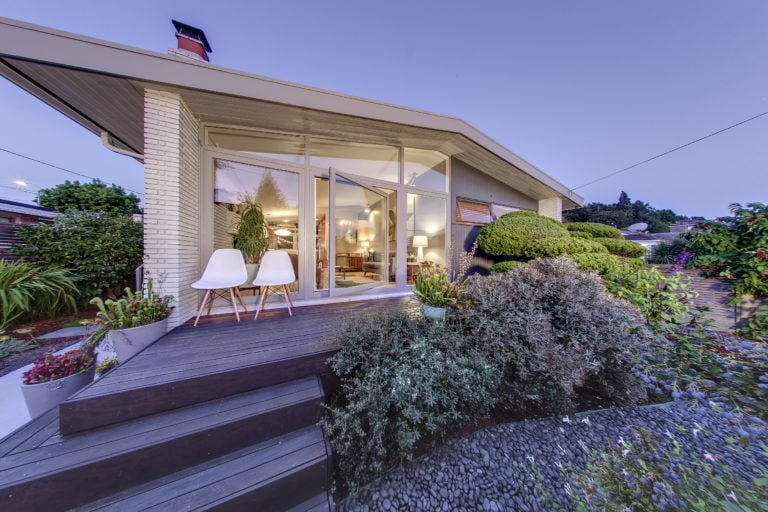
New home developments in Capitol Hill, Seattle, are newly built townhomes, rowhouses and condos sold by their builders, mostly small infill projects on lots that once held a single older building. These projects answer the neighborhood’s desperate need for inventory, and they offer owner-occupants and any investor looking for a newly built home with modern systems.
Key Takeaway
Most new homes you can buy in Capitol Hill are townhomes and rowhouses in small clusters. New for-sale condos are scarce, because most large new buildings are rentals. Before you commit, decide between pre-sale and move-in ready. Check the warranty, the shared-maintenance or condo documents and the builder’s delay terms, with your own agent beside you.
Who This Guide Is For
This guide is for buyers looking to purchase a newly built townhome, rowhouse or condo in Capitol Hill, Seattle.
New Home Developments in Capitol Hill at a Glance
- Selling now: The Henrie, 24 on Howell and Rue’s last home. IIIVI is listed without a sold tag.
- Few new buildings sell condos; most large ones are rentals.
- Pre-sale locks your price, but delivery dates can slip.
- Condo warranty claims: four years. New-condo cancellation window: seven days.
- Check any address’s zoning and permits in the city’s lookup tools.
New Construction Townhomes and Rowhouses for Sale in Capitol Hill
New townhomes go up in small clusters, usually on a lot that held one older house.
Capitol Hill Townhomes by Olsen Anderson
Olsen Anderson’s townhome community at 1609 19th Avenue (98122), marketed as The Henrie, has 21 townhomes with rooftop decks. The builder’s site lists it as “Now selling,” and a company post describes the three-phase project as complete. The builder’s site publishes no starting price, so ask for the current price sheet.
24 on Howell
Ashworth Homes is selling 24 on Howell, a community of 24 townhomes at the corner of 17th Ave and E Howell St (98122). Homes have two to three bedrooms and about 1,500 to 1,624 square feet. Each has assigned parking, and select homes have a private garage. A third-party project sales page has listed the community from $995,950; confirm current pricing with the builder.
Other Communities
- Rue (Shelter Homes): 501-505 11th Ave E and 1062-1066 E Republican St (98102). Six townhomes with attached garages and rooftop decks, completed in fall 2024. The builder lists one home remaining; its property page shows homes from $1,385,900.
- IIIVI (Shelter Homes): 1116 13th Ave (98122). Townhomes listed on the builder’s site without a sold tag, so ask the builder for current status.
- Sold out (Shelter Homes): Element 2 (926 and 930 Broadway E, 6 homes), Austin on Cap Hill (1713-1717 14th Ave, 8 homes), 2SIXteen (216 10th Ave E, 6 homes) and Primrose Square (523A-D and 525 20th Ave E).
New Construction Condos for Sale in Capitol Hill
New purchase condos on the Hill tend to be in boutique or mixed-use buildings. Two well-known recent projects are rental and affordable-housing buildings, not homes for sale: Tanager at 14th and Union and Constellation Center at Broadway and Pine. Both reflect how rentals dominated the last cycle.
If you want a new condo, set a new-construction alert and watch developers’ own sites, since a boutique building can release only a handful of units. A building’s sale or rental status shows in its listing and in its city permit records.
How to Find New Construction Listings in Capitol Hill
New builds reach buyers through several channels, and no single one shows everything.
- Builder websites and interest lists: Sign up with each builder active on the Hill. Pre-sale releases often reach the interest list before public marketing starts. The current projects in this guide come from local builders Shelter Homes, Ashworth Homes and Olsen Anderson. A large national builder’s Seattle-area listings will not show them.
- New-construction filters on listing portals: MLS-fed portals let you filter for new construction. Some builders market only on their own site, so the filter can miss homes.
- Builder community directories: These group homes by community, which helps you compare floor plans and status within one project. Pages can lag, as Rue’s does. Confirm status with the sales office for any community advertised by name.
- City permit and land-use records: Permit filings show projects before they are marketed.
- A buyer’s agent: An agent can set up new-listing alerts and track each builder’s release timing.
The same channels work for new construction anywhere in the Seattle area, including outside the city limits; use that area’s builders and that city’s permit lookup.
Buying Guide: Pre-Sale vs. Move-In Ready
Pre-Sale Opportunities
Homes in a project still under construction are often sold before the drywall is up.
- The upside: You lock in today’s price, which protects you if the market jumps 5% before the home is finished. Sometimes you can also select finish packages.
- The risk: Construction delays are real. A promised spring delivery can slide into the following winter.
Move-In Ready
Completed inventory, such as Rue’s last home, is the other path.
- The upside: You can walk the actual unit, check the natural light and see the view from the rooftop deck. You get the keys at closing.
- The trade-off: You usually pay the current market rate, and pre-sale buyers may already have taken the best units.
Builder Incentives
Builders sometimes offer credits toward closing costs or rate buydowns, which lower your mortgage rate for the first year or two. Before you compare offers, ask your lender what your payment becomes once a buydown ends.
What to Check Before Buying New Construction
Run through these before you sign, and again before closing on a pre-sale.
- Warranty: For a new condo, Washington law (RCW 64.90.670) gives you implied warranties from the declarant and any dealer.
- The unit must be in at least as good condition at conveyance as when you signed.
- For communities created before July 27, 2025, it must also be free of defective materials, built to code and built in a workmanlike manner.
- These warranties can be excluded or modified only as RCW 64.90.675 allows, and a written warranty generally cannot limit them.
- Claims must be brought within four years, counted from when the unit was conveyed or the building enclosure was completed.
- New condos: The declarant must give you a public offering statement before conveyance. You can cancel within seven days after first receiving it, without penalty, and all payments must be refunded promptly.
- Ownership and shared maintenance: New townhome clusters in Seattle are usually sold through a unit lot subdivision, so you own your unit and small yard outright instead of a condo unit. Access easements and joint use and maintenance agreements cover shared garages, driveways, open space and utilities. They are recorded with the King County Recorder and include use of any required EV charging in shared parking. Read them before you sign. Some clusters also form an association, and what HOA dues cost on the Hill varies widely, so ask for the budget alongside the agreements.
- Parking: Confirm whether a garage or space is deeded, assigned or not included. Street parking on the Hill is competitive.
- Independent inspection: Get one even on a new build. On a pre-sale, add a check before drywall goes up.
- Builder contract: Builders often use their own purchase agreement. Read the deposit terms, the completion and delay clauses, and what happens if delivery slips.
- Energy certification: If the builder claims Built Green or a similar rating, ask for the documentation.
New Construction vs. Resale in Capitol Hill
Most housing on the Hill is attached, so you are usually comparing a new attached home with an older one.
Condition is the clearest difference. A new build comes with new mechanical systems and the warranty protections above, while older homes may need updates soon after you move in.
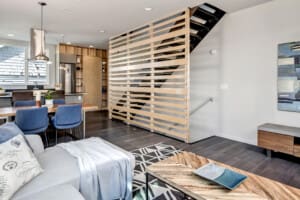
Layouts differ too. New townhomes are tall and narrow, with stairs on every level and often a rooftop deck. Older condos tend to be single-level, and older houses may come with a yard.
Modern homes on the Hill are mostly new construction; Ashworth Homes, for example, describes 24 on Howell as modern townhomes. Resale stock runs from vintage brick condos to craftsman houses.
Price per square foot follows finishes, parking and whether you own your own lot. Negotiation works differently: builders move with incentives, while a resale seller may flex on price or terms. Timing differs as well, from a pre-sale wait to a standard closing. Current prices and competition for both new and resale homes shift month to month, so check recent sales before you make an offer. A Capitol Hill housing market snapshot details these local figures.
How Zoning and Design Review Shape New Homes in Capitol Hill
Most of Capitol Hill is zoned Lowrise (LR1 to LR3) and Midrise multifamily:
- Lowrise zones produce townhomes, rowhouses and small apartment or condo buildings.
- Midrise zones allow larger mid-rise buildings, the source of most new apartments and the few new condos.
- Neighborhood Commercial zoning lines the main shopping streets.
- Neighborhood Residential, the zone for houses, covers only a small part of the Hill.
Seattle’s permanent Neighborhood Residential rules took effect January 21, 2026, to comply with state House Bill 1110. They allow at least four units on a typical residential lot. That rises to at least six units within a quarter-mile walk of a major transit stop, or when at least two units are income-restricted affordable housing. The same legislation updated Lowrise and Midrise zones and converted former Residential Small Lot areas to Lowrise or Neighborhood Residential.
In fall 2025 the City Council passed temporary rules (Council Bill 121048) that pause mandatory Design Review for many housing projects while the city writes permanent rules. For buyers, that means shorter build timelines; check the city’s Design Review page for current status.
What can be built depends on the specific address and its neighboring lots. Look up zoning in the SDCI Property Information Map (GIS). Check permit or land-use status in the Seattle Services Portal, which also feeds SDCI’s Permit & Site History Research Tool. Both work property by property, so search by street address rather than neighborhood name. Rely on the current map rather than a listing’s description, because designations change, as the 2026 update shows. If you would rather buy a lot and build your own home, the same zoning lookup shows how many units that lot allows.
Where New Homes Are Being Built in Capitol Hill
Each part of the Hill tends to produce a different kind of new home.
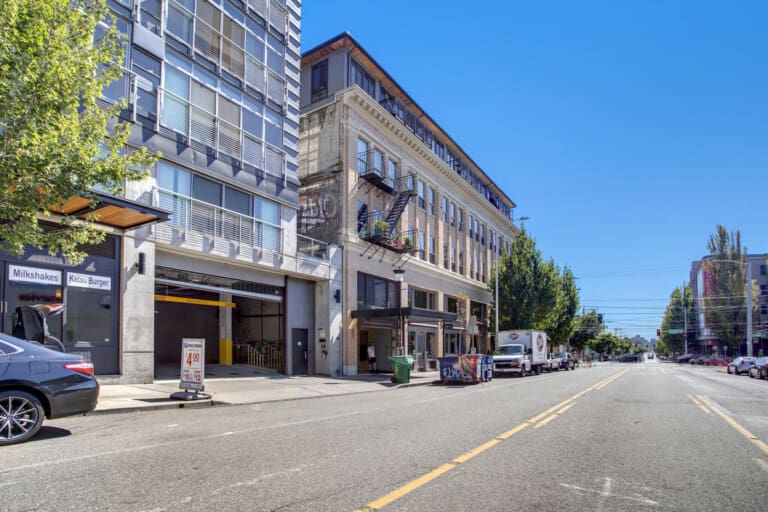
- Broadway near the Capitol Hill Link Station: Neighborhood Commercial zoning brings mid-rise and mixed-use buildings with apartments above storefronts. Any new condos tend to appear here.
- Pike/Pine: Also Neighborhood Commercial. Developers keep the historic auto-row storefronts and build vertical additions above them.
- 15th Ave E: Another Neighborhood Commercial corridor, with apartments above ground-floor storefronts.
- The 15th to 19th Ave side streets: Lowrise and Midrise blocks, including the Stevens area, where townhome clusters are replacing older houses.
- North Capitol Hill: North of Volunteer Park, zoning shifts to Neighborhood Residential, so new homes are few and mostly small infill under the rules above.
Parks, transit and daily life differ by pocket, so walk the blocks around any project at different times of day before you buy.
Frequently Asked Questions
Do New Home Developments in Capitol Hill Require Permits?
Yes. Every new project goes through permitting for safety, zoning compliance and utility connections, though mandatory Design Review is paused under the temporary rules above.
What Is the Difference Between a Townhome and a Rowhouse in Seattle?
Listings often use the terms interchangeably, but Seattle’s Land Use Code (SMC 23.84A.032) separates them. In a rowhouse development, every unit is attached side by side along common walls and directly faces the street. A townhouse development is multifamily housing that is not a rowhouse development and meets the code’s separate townhouse conditions. Whether your home sits on its own specific tax parcel depends on how the cluster was subdivided.
Should I Bring My Own Agent When Buying From a Builder in Capitol Hill?
Yes. The builder’s on-site sales staff represent the builder, while your own agent reviews the builder’s contract, negotiates incentives and checks the delivery terms. Since January 1, 2024, Washington law (RCW 18.86) requires a written buyer brokerage agreement before, or as soon as reasonably practical after, the broker starts working for you. The agreement sets the term (at least 60 days), the broker’s name, exclusivity and compensation. Check the builder’s agent-registration policy before your first visit.
Are There New Single-Family Houses for Sale in Capitol Hill?
Rarely. Neighborhood Residential zoning sits mainly in North Capitol Hill, so the few new detached homes tend to be there.
How Can I Find Out What Might Be Built Next to a Home I’m Buying?
Look up the neighboring lots’ zoning in the SDCI Property Information Map and search their addresses in the Seattle Services Portal for filed applications. A taller building next door can cut the light and view from your rooftop deck.
Can I Buy Into Capitol Hill Urban Cohousing?
Cohousing is a small community where households have private homes and share common space and decisions. Capitol Hill Urban Cohousing, at 1722 12th Avenue, is a nine-unit community on a 4,500-square-foot lot, occupied since 2016. All units are spoken for and none are for sale. Members have joined the community’s LLC (a $30,000 buy-in has been cited) instead of buying on the open market. To hear about future openings, join its mailing list.
Kim Colaprete
- March 16, 2026
- Capitol Hill Seattle
Chat With A Diva: 206 271 0264 or schedule time with Kim and start your home search!
Sources
- Shelter Homes: Communities
- Olsen Anderson: Where We Are Building
- Ashworth Homes: 24 on Howell
- RCW 64.90.670: Implied Warranties of Quality
- RCW 64.90.635: Purchaser’s Right to Cancel
- City of Seattle: Townhouses White Paper
- City of Seattle: One Seattle Plan
- SDCI: 2025 Design Review Program Changes
- SDCI: Research a Project
- Seattle Atlas: Capitol Hill
- Seattle City Council: SMC 23.84A.032 Definitions
- RCW 18.86: Real Estate Brokerage Relationships
- Capitol Hill Urban Cohousing: Overview