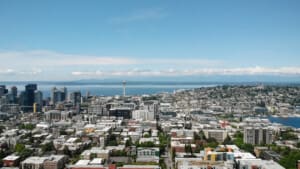


Capitol Hill is arguably Seattle’s most eclectic, walkable, and vibrant neighborhood. From the quiet, tree-lined streets of Millionaire’s Row in North Capitol Hill to the high-energy Pike/Pine corridor, living here offers a lifestyle you just can’t replicate in the suburbs. But if you are looking to build a custom home here, you need to know going in that this is not for the faint of heart.
Building in zip codes 98102 or 98112 is possible, but it requires navigating a complex web of zoning overlays, steep slopes, and a market where vacant land is practically non-existent. You aren’t just hiring a builder; you are likely managing a teardown project in a dense urban environment.
In this guide, we are going to walk through the real numbers for 2026, from construction costs that often exceed $500 per square foot to the specific zoning challenges you will face with the city.
The Inventory Reality: Buying a Teardown
Let’s start with the land itself. If you are hunting for a pristine, vacant lot in Capitol Hill, you are looking for a unicorn. In this neighborhood, 95% of custom home projects start with a teardown purchase. You are buying an existing structure—often a 1920s bungalow or a mid-century home past its prime—solely for the dirt underneath it.
This creates a unique competitive landscape. You aren’t just bidding against other custom home buyers; you are often competing with developers who see that same lot as an opportunity to build three or four townhomes. Because of this, you have to account for the “Teardown Premium.” In prime locations, you should expect to pay between $800K and $1.2M just to secure the property, even if the house itself has zero value to your project.
Before you close on a property intended for demolition, your due diligence needs to be thorough. In older Seattle neighborhoods like this, underground oil tanks are common, and sewer lines can be nearly a century old. Always verify these elements during your feasibility study, as remediation can add unexpected costs before you even break ground.
Navigating Capitol Hill’s Regulatory Landscape
Once you have the site, you have to deal with the Seattle Department of Construction & Inspections (SDCI). Capitol Hill has some of the most specific zoning overlays in the city, and what you can build depends entirely on exactly where your lot sits.
RSL (Residential Small Lot) Zoning
You will see the term “RSL” frequently. This stands for Residential Small Lot, a zoning designation designed to encourage “missing middle” housing. It allows for higher density and typically permits 50% lot coverage. This is excellent if you are looking to maximize square footage or design a multi-generational property with a detached cottage, but it also means your neighbors might be building closer to your property line than you expect.
Harvard-Belmont Landmark District
If you are looking in the prestigious Harvard-Belmont district, the rules change drastically. This area is protected by the Landmarks Preservation Board. You cannot simply bulldoze a home and put up a modern box. Any new structure must be compatible with the historic context of the neighborhood, and you will need a “Certificate of Approval” from the board. This process is rigorous and can easily add 6 to 12 months to your timeline.
Environmentally Critical Areas (ECA)
Capitol Hill is hilly, and the city keeps a close eye on erosion. If your lot has a slope greater than 40%, it is likely designated as an Environmentally Critical Area (ECA). Building here requires a geotechnical engineer to sign off on soil stability, and you may be required to maintain a “buffer” zone where no building can occur. This reduces your buildable footprint, so check the GIS maps early.
Cost Analysis: Building a Custom Home in 98102 & 98112
Let’s talk about the budget. Construction costs in Seattle have risen significantly, and Capitol Hill commands a premium due to the complexity of the sites.
Hard Costs
For a custom build in 2025, you are looking at a range of $500 to $900+ per square foot for the construction alone. The lower end of that range ($500/sq ft) gets you high-quality but standard finishes. If you are aiming for true luxury—custom cabinetry, high-end stone, smart home integration, and architectural steel—you will be pushing toward that $900 mark.
Soft Costs
Do not overlook the “soft costs.” These include your architect, structural engineer, civil engineer, and the various permit fees from the SDCI. For a complex custom home, these fees can easily total $50K – $100K or more.
The Site Work Premium
Building in the city costs more than building in a sprawling suburb. Excavation on a slope, traffic control on narrow streets, and managing soil export all add up. You should budget a 10% – 15% buffer specifically for these site-related logistics.
Estimated Project Budget (3,000 sq ft home):
- Construction: $1.5M – $2.7M
- Permits & Fees: $50K – $100K+
- Land: $800K – $1.5M+
- Total Investment: Likely exceeding $2.5M.
Construction Logistics: Narrow Streets and Steep Grades
One of the biggest surprises for clients building in Capitol Hill is the logistical difficulty. These streets were platted a hundred years ago; they are narrow, often lined with parked cars, and busy with pedestrian traffic.
If your lot is on a steep grade, your builder may need to use pin piles or complex foundation systems to anchor the home. Getting the equipment to do this requires careful planning. You will need Street Use Permits from SDOT (Seattle Department of Transportation) just to block off parking spots for dumpsters, concrete trucks, and material deliveries.
In the denser RSL zones, your neighbors might be only 10 feet away. Managing noise, dust, and vibration is critical. If a neighbor complains about excessive dust or blocked driveways, the city can issue a work-stop order, which kills your momentum.
Site security is also a non-negotiable line item. Because of the urban density and high foot traffic, you need robust fencing, lighting, and cameras to secure the site during construction.
Design & Lifestyle: Fitting In While Standing Out
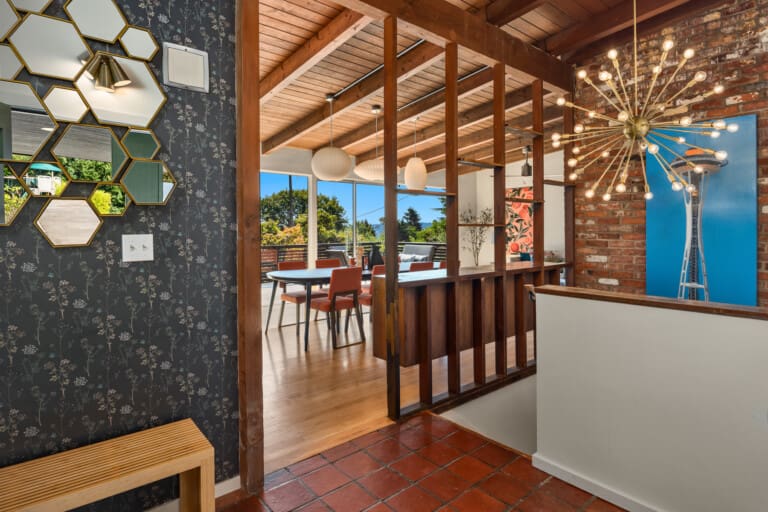
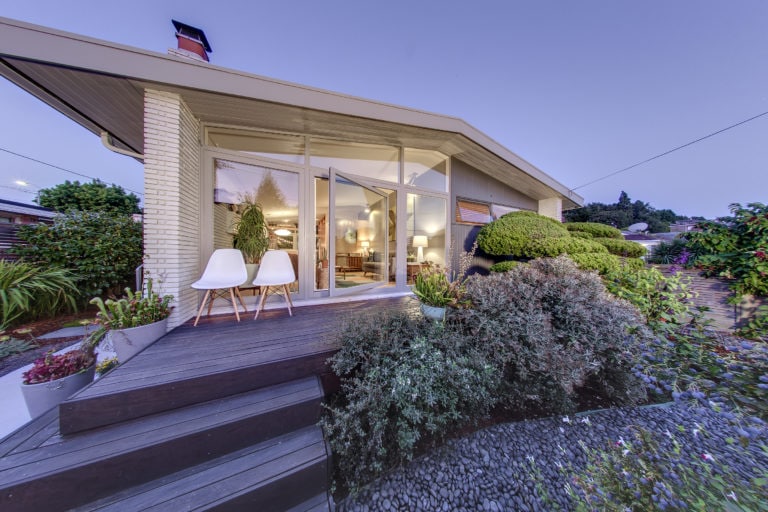
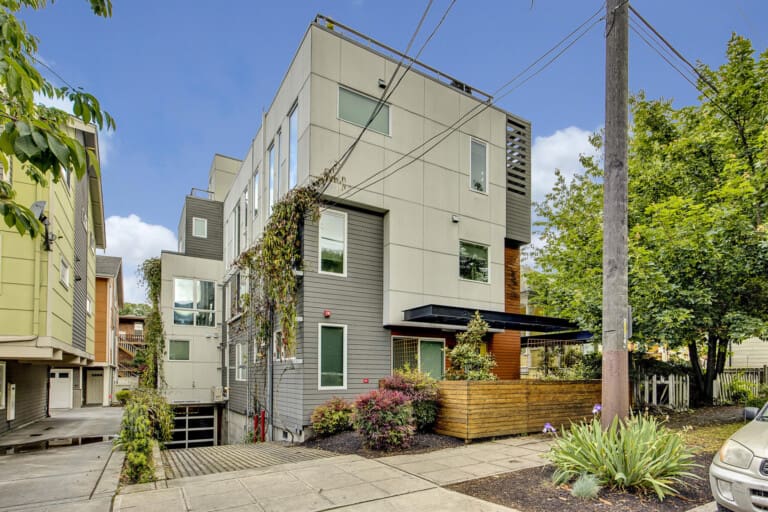
Designing for Capitol Hill is a balancing act. The neighborhood is visually diverse, where Victorian mansions sit comfortably near Craftsman bungalows and ultra-modern cubic homes.
A popular trend we are seeing is “upside-down” living. Because views of Lake Union, the Space Needle, or the Cascades are often better from the second or third floor, many architects place the kitchen and main living areas on the top level, with bedrooms below. This maximizes your view potential.
Privacy is the other major design driver. In RSL zones, you don’t have acreage to buffer you from the street. Smart architects use strategic window placement, privacy screens, and landscaping to create a sense of seclusion, even when the city is buzzing right outside your door.
FAQs About Building in Capitol Hill
How much does it cost to build a 3,000 sq ft house in Capitol Hill?
For the construction portion only (excluding land), you should budget between $1.5M and $2.7M. This assumes a cost range of $500 to $900 per square foot, depending heavily on the level of luxury finishes and site complexity.
Can I build a DADU (backyard cottage) in Capitol Hill?
Yes, in most cases. RSL (Residential Small Lot) and Neighborhood Residential zones generally allow for Detached Accessory Dwelling Units (DADUs), often up to 1,000 square feet. These are popular for guest suites or rental income, but they do count toward your lot coverage limits.
How long does it take to get a building permit in Seattle?
For a standard custom home, the review process typically takes 6 to 9 months. However, if your lot is in an ECA (steep slope) or the Harvard-Belmont Historic District, the additional reviews can push that timeline to 12 months or longer.
Is it cheaper to buy or build in Capitol Hill?
Buying an existing renovated home is almost always cheaper upfront. Building a custom home commands a premium because you are paying for modern codes, custom design, and new materials, but it is the only way to get exactly what you want in this specific location.