
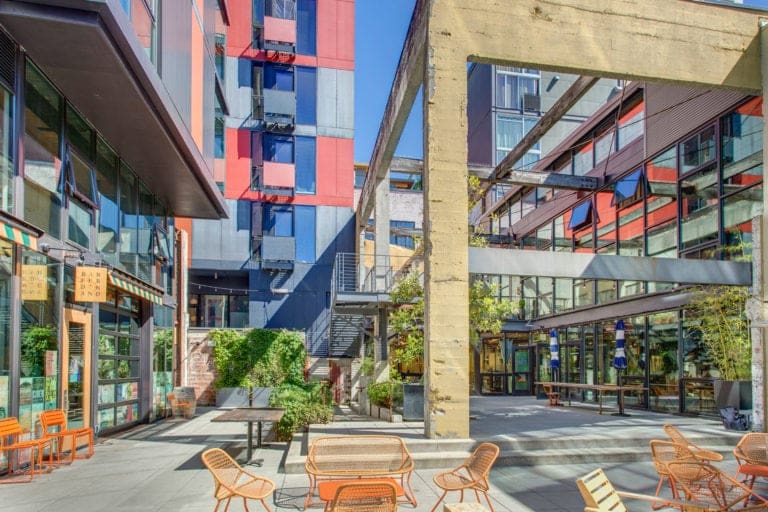

The median home price in Capitol Hill is roughly $944,000, meaning a single percentage point in commission costs a seller about $9,447. That dollar amount shifts considerably depending on what you are selling: a detached house, a townhouse, or a condo. Those finalizing their plans often consult our resources on how to sell your home fast in Capitol Hill.
The flat percentage model is changing, and sellers are paying closer attention to what they pay and what they get for it. No law or board sets a commission rate in Washington. The rate is negotiated directly in the listing agreement.
Key takeaway
Commissions in Capitol Hill are negotiable, and what they cost depends far more on what you’re selling than on the rate: one percentage point is about $16,400 on a median single-family sale. Single-family sellers, whose homes have been selling fast and above asking, have the most room to negotiate the rate. Condo sellers, facing slower sales and below-list prices, usually get more by negotiating what the agent does for the fee.
Who this guide is for
This guide is for owners preparing to sell a home in Capitol Hill who are deciding what commission to agree to, whether to offer anything toward a buyer’s broker, and what the fee should buy.
How much real estate commissions cost in Capitol Hill
In Capitol Hill, a flat commission percentage works differently depending on what you’re selling. Single-family sellers pay the largest fee, about $16,392 per percentage point on a $1,639,228 median sale price, for homes that recently sold in a median of 7 days at slightly over list price. These sellers have the most room to push on rate.
Condo sellers pay the smallest fee, roughly $4,700 per point, for the hardest sale. Condos recently sat for 34 days, sold below list, and faced 7.7 months of supply. A half-point difference is worth roughly $8,200 to a house seller and $2,350 to a condo seller, so the rate negotiation matters far more on one type than the other.
The same percentage buys very different jobs depending on your property type. Condo sellers should focus on negotiating what the fee buys rather than how small it is. Single-family sellers can lean harder on the rate itself.
Questions to answer before you sign a listing agreement
Figure out what matters most for your specific sale before you sit down with a broker.
Are you selling a detached house in move-in condition that’s likely to draw quick interest? Read the single-family homes section below, then the negotiating section on rate and tiered structures. Are you selling a condo, especially in a building with other units for sale? Read the condos section, then the negotiating section on services and marketing.
Is your likely buyer working with a broker who’ll ask you to cover their fee? Read the section on who pays real estate commissions in Washington. Do you need to know what you’ll walk away with after every cost, not just the commission? Read the section on your other selling costs to compare a cash offer or calculate net proceeds.
Who pays real estate commissions in Washington
The seller pays the listing brokerage under the listing agreement, out of sale proceeds at closing. Since the August 2024 National Association of REALTORS® settlement practice changes, offers of buyer-broker compensation no longer appear on the MLS.
Washington also requires a written buyer brokerage services agreement that states how the buyer’s broker is paid. A seller can still agree to pay some or all of a buyer’s broker fee, typically negotiated in the purchase offer, or the buyer pays it directly. If one brokerage represents both sides, Washington’s limited dual agency rules apply and require written consent in the services agreement.
Deciding up front how you’ll handle a buyer’s broker request affects which buyers can afford to make an offer. That matters most in the condo market, where buyers have plenty of choices.
Commission costs by property type in Capitol Hill
The type of home you own dictates how hard your broker has to work to find a buyer. That changes your negotiating position considerably.
Single-family homes
Detached houses involve the biggest dollar fee for the fastest sale. Over the last 90 days, the typical Capitol Hill house sold for about 2% over its asking price. Because detached houses sold quickly and above asking, a listing broker’s main job is pricing and managing offers, not long-haul marketing.
That gives the seller the strongest position to push on rate or ask for a tiered structure, such as a lower base rate with a higher rate on any amount above an agreed price. Because each point is worth about $16,392 on the median sale, a modest rate concession is real money.
The downside is that the 20-sale sample is thin, and a house that misses the first week can sit like any other listing. A rate discount that comes with thinner preparation can backfire, and mispricing a house that would have drawn competing offers costs more than any rate saving.
Townhouses
Townhouses had the tightest supply on the hill, about 2.3 months’ worth of listings, yet still typically sold just under asking. Buyers compare near-identical units side by side, so the fee should buy sharp comparable-sales pricing and presentation that sets your unit apart.
There’s room to negotiate the rate, but less than for a detached house. Check what’s being built nearby before you set a price, because your unit may be competing with new construction from builders who can offer incentives a resale seller can’t. What you give up with a lower fee might be marketing reach. Treat these figures as directional given the 21-sale sample; the year-over-year price change (down 1%, based on 21 townhouse sales) should be read as a rough signal, not a firm trend.
Condos
Condos carry the smallest dollar fee for the hardest sale. The typical Capitol Hill condo sold for about 3.7% under its asking price, while the typical house on the same hill sold over it. That gap between contract price and list price is more than an entire 3% fee on a typical condo sale, so closing even part of it is worth more than shaving a point off the commission.
Condo sellers face the most competition, so their bargaining power on rate is weakest and the payoff from strong marketing is largest.
Negotiate the services the fee buys: professional photography, staging, and a clear plan to stand out against other units in the building. Lender condo approval affects the buyer pool, so check whether your building appears on HUD’s FHA-approved condominium lookup. The downside to pushing for the lowest rate is that cutting the commission to save a few thousand dollars can cut the marketing a condo needs to stand out among dozens of listings. Condo sellers also carry costs houses don’t, such as the HOA resale certificate, so ask the HOA what it charges and how long it takes before you list.
Capitol Hill home sales at a glance
Single-family and townhouse figures rest on fewer than 30 sales, so treat them as directional rather than firm trends. Check local housing market trends to see how these numbers shift over time.
- Single family (90 days ending 2026-09-30, based on 20 sales, so treat as directional): median sale price $1,639,228; median 7 days on market; 102.1% sale-to-list; 34.9% sold above list; 3.4 months of supply; 23 active listings; median $639 per sq ft; median price down 20% year over year, likely reflecting which homes sold in a small sample
- Townhouse (90 days ending 2026-09-30, based on 21 sales, so treat as directional): median sale price $975,000; median 29 days on market; 99% sale-to-list; 14.2% sold above list; 2.3 months of supply; 16 active listings; median $646 per sq ft; median price down 1% year over year
- Condo (90 days ending 2026-09-30, based on 32 sales): median sale price $470,000; median 34 days on market; 96.3% sale-to-list; 9.6% sold above list; 7.7 months of supply; 79 active listings; median $552 per sq ft; median price up 11.2% year over year
- All homes (90 days ending 2026-09-30, based on 73 sales): median sale price $944,685; median 24 days on market; 98.7% sale-to-list; 18% sold above list; 5.2 months of supply; 124 active listings; median $596 per sq ft; median price up 5.1% year over year
How to negotiate a real estate commission
Getting past the headline percentage is what gets you a better result. Get every listing broker’s proposal in writing, including the commission, what it covers, the listing term, and the cancellation terms, before you sign anything. When you see an average commission figure online, check the date and area it covers before you use it as a benchmark.
Interview more than one listing broker and compare written proposals rather than just rates. Ask each broker for a line-by-line list of what the fee covers: photography, staging, pre-listing repairs, open houses, paid advertising. Verify any broker’s license status with the Washington State Department of Licensing license lookup. Ask how many comparable listings are active in your building or property type the week you plan to list, since supply changes month to month.
Raise structures that tie pay to results, such as tiered rates above an agreed price or a lower rate if the broker also represents the buyer under limited dual agency. Confirm what Washington requires in writing for these arrangements. Ask how the broker will handle a buyer’s request that you cover their broker’s fee, and where any offer of compensation will be communicated now that it can’t appear on the MLS.
Understand flat-fee and discount listings and what you typically give up with them: showing coordination, negotiation, and marketing spend. Decide in advance your position on buyer-broker compensation requests. If you want a benchmark to compare, ask Team Diva Real Estate for a written listing proposal.
Commission and your other selling costs
The commission is usually the largest line on a seller’s settlement statement, but it’s not the only one. Sellers also pay excise tax, title insurance, and escrow fees, plus any repairs tied to your seller disclosures.
Review a full breakdown of your property tax bill and other expenses in a complete seller closing costs estimate. How long it takes to sell also affects your carrying costs, so factor your timeline into your net proceeds calculation.
Frequently asked questions
How much would a real estate agent make on a $300,000 house?
Each point of commission equals $3,000 on a $300,000 house. The total commission is shared between the listing and buyer brokerages, and each brokerage then splits its share with the agent under their own agreement, such as an 80/20 split. The individual agent’s gross is well below the headline figure, before their own business costs. The median Capitol Hill condo sold for $470,000, so each point on a typical condo here is about $4,700.
Is 3% a standard realtor fee in Washington?
No rate is standard or set by Washington law. Commissions are entirely negotiable. The required disclosure pamphlet, “Real Estate Brokerage in Washington,” outlines brokerage relationship laws but does not mandate fees. Rates vary by broker, property type, and the specific services included in the listing agreement.
Are agents still charging 6% after the new commission rules?
There’s no single combined rate to quote, and totals vary deal by deal. The listing side is set in the listing agreement, and the buyer side is now set in the buyer’s written agreement.