

If you are looking at condos for sale in Capitol Hill, you have likely experienced a specific moment of shock. You find a unit listed at a great price, you scroll down to the monthly payment section, and then you see it: the HOA fee.
Let’s be real—Seattle has some of the highest HOA fees in the country. It is not uncommon for buyers to see dues ranging from $300 to well over $900 a month, depending on the building. When you are trying to calculate your monthly housing budget, that number can feel like a dealbreaker.
However, high fees aren’t always the red flag they appear to be. In many cases, these dues are simply a bundled version of costs you would pay anyway, such as expensive Seattle water/sewer bills, gym memberships, and structural insurance. The goal isn’t to find the cheapest fee—it’s to find the fee that offers the best financial stability.
How Much Are HOA Fees in Capitol Hill? (2026 Data)
When analyzing the market, it helps to look at the “price per square foot” for dues. In 2026, a healthy range for Capitol Hill generally falls between $0.60 and $0.90 per square foot. If you see something significantly lower, the building might be underfunding its reserves. If it is significantly higher, you are likely paying for luxury services.
Here is a breakdown of what you can typically expect to pay monthly based on unit size:
- Studio / 1-Bedroom (approx. 450–700 sq ft): Typically $350–$600/month.
- 2-Bedroom / Penthouse (approx. 900–1,200+ sq ft): Often $700–$1,200+/month.
For example, a standard 670-square-foot one-bedroom condo near the light rail station often carries dues around $550/month. These numbers have crept up recently due to inflation and a sharp rise in master insurance premiums across Washington State.
Historic Brick vs. Modern Glass: Where Do Fees Go?
Capitol Hill is a patchwork of architecture, from the gritty, industrial vibe of the Pike/Pine corridor to the quieter, tree-lined streets of North Capitol Hill near Volunteer Park. The type of building you choose dictates exactly where your money goes.
Historic Walk-Ups (1920s era) If you fall in love with a classic brick building, know that your dues are fighting gravity and time. These buildings rarely have elevators, concierges, or gyms, so you aren’t paying for payroll. Instead, your high fees are going toward structural maintenance. Tuckpointing masonry, updating century-old plumbing, and fixing boilers are expensive capital projects. You are paying to keep a piece of history standing.
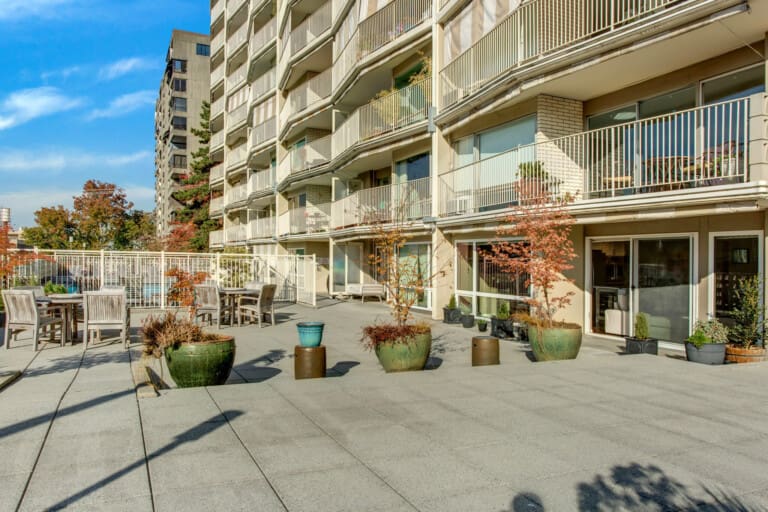
Modern High-Rises (2010s and newer) Conversely, if you buy into a sleek glass tower, your dues are largely funding a lifestyle. These buildings require massive operating budgets to pay for 24/7 concierge staff, elevator maintenance contracts, and the upkeep of amenities like rooftop decks and fitness centers.
The “Sweet Spot” and Risks Mid-rise buildings constructed in the 1990s and early 2000s often offer a middle ground—lower fees than new construction but less structural drama than 1920s brick. However, buyers need to be vigilant here. This era of construction sometimes faces “special assessments” for siding replacement or window updates, so checking the financial health of the HOA is critical.
What Do Capitol Hill HOA Dues Actually Cover?
When you write that check every month, you aren’t just throwing money away. You are paying for essential services that single-family homeowners have to manage separately.
- Utilities: This is the big one. In almost every Seattle condo, Seattle Public Utilities charges (water, sewer, and garbage) are included in the dues. If you have ever paid a water bill in Seattle, you know this can easily run $150–$200+ a month for a household.
- Master Insurance Policy: The HOA covers the insurance for the physical structure of the building (studs out). You only need a cheaper “walls-in” policy (HO-6) for your personal belongings and interior finishes.
- Earthquake Insurance: This is specific to our region. Many older buildings in Capitol Hill carry high-deductible earthquake policies. These are expensive, but in a seismic zone, they are essential for protecting your equity.
- Reserves: Think of this as a forced savings account. A portion of your dues goes into a reserve fund to pay for future roofs, siding, and painting, so you aren’t hit with a massive bill all at once.
Note: Electricity and internet are almost never included in HOA dues; you will pay those separately.
Will HOA Fees Ever Go Down?
This is the most common question buyers ask, and the honest answer is almost certainly no.
Inflation impacts an HOA just like it impacts your grocery bill. The cost of labor for maintenance staff, construction materials for repairs, and insurance premiums continues to rise. If an HOA lowers its fees, it usually means they are cutting services or—worse—stopping their contributions to the reserve fund.
Furthermore, state regulations known as WUCIOA (Washington Uniform Common Interest Ownership Act) have changed the game. New laws require buildings to be much stricter about funding their reserves. The days of artificially keeping dues low to attract buyers are over because the state wants to prevent buildings from falling into disrepair.
If you see a building with suspiciously low fees, treat it as a red flag. It often means they are not saving enough money, and a large special assessment (a one-time cash call to owners) could be looming on the horizon.
Smart Buying: How to Analyze the HOA Before You Close
Buying a condo isn’t just about liking the layout; it’s about auditing a business. During your contract’s due diligence period, you and your agent need to dig into the documents to ensure the building is financially sound.
Review the Resale Certificate This is the building’s financial report card. It will tell you how much money is in the bank, whether any owners are delinquent on their dues, and if there are any lawsuits against the HOA.
Check the Reserve Study Washington law requires condos to update their Reserve Study annually. This document predicts how much life is left in the roof, windows, and plumbing, and how much money the building needs to fix them. Look for a “Percent Funded” number. If a building is 70% funded or higher, they are in great shape. If they are under 30%, you should proceed with extreme caution or negotiate the price down.
Read the Board Minutes Skim the last 12 months of meeting minutes. This is where you find the real story. Are the elevators constantly breaking? Is there a leak on the 4th floor that they can’t figure out? Board minutes reveal the day-to-day headaches you are buying into.
Lender Requirements Finally, remember that your lender cares about the HOA, too. Agencies like Fannie Mae may deny a mortgage if the building isn’t contributing enough to reserves or if too many units are owned by investors.
Frequently Asked Questions
Is there a legal cap on how much HOA fees can increase in Seattle?
Generally, no. Unless the specific building’s governing documents (CC&Rs) state otherwise, the Board of Directors can raise dues as much as necessary to cover the budget and reserve requirements. While this sounds scary, it is necessary to keep the building solvent.
Are HOA fees in Capitol Hill tax deductible?
For the average owner-occupant, no, HOA fees are not tax-deductible. However, if you are an investor renting out the unit, these fees are typically considered a business expense and can be deducted against your rental income.
Why are HOA fees higher in Capitol Hill than other Seattle neighborhoods?
It usually comes down to density, age, and amenities. Capitol Hill has a high concentration of historic buildings (expensive to maintain) and luxury high-rises (expensive to staff). Neighborhoods with simpler, garden-style walk-ups often have lower overhead.
Do HOA fees affect my mortgage approval?
Yes. Lenders factor the monthly HOA fee into your Debt-to-Income (DTI) ratio. A $600 HOA fee reduces your purchasing power roughly equivalent to $100,000 in mortgage principal, so it is vital to have accurate numbers before making an offer.