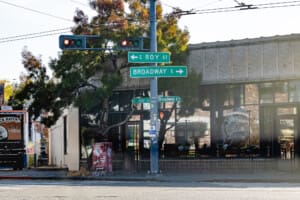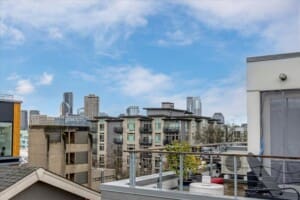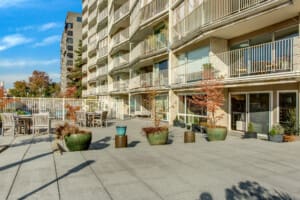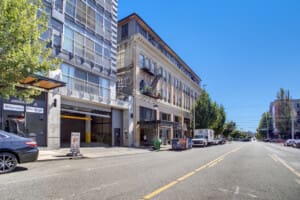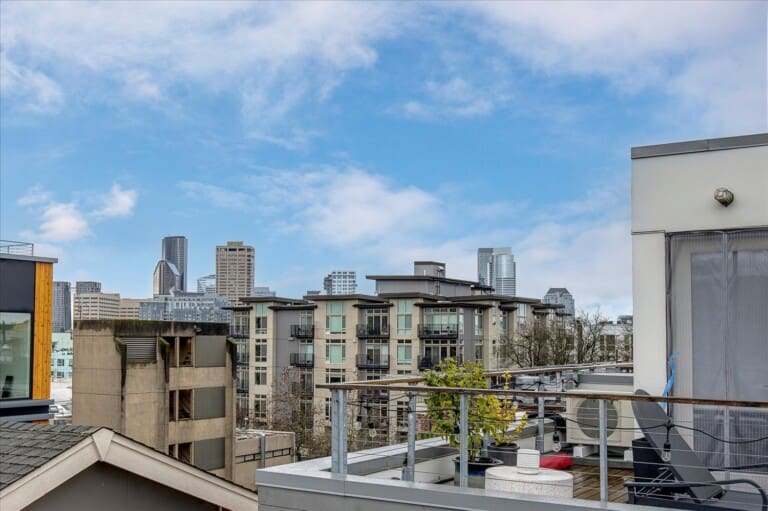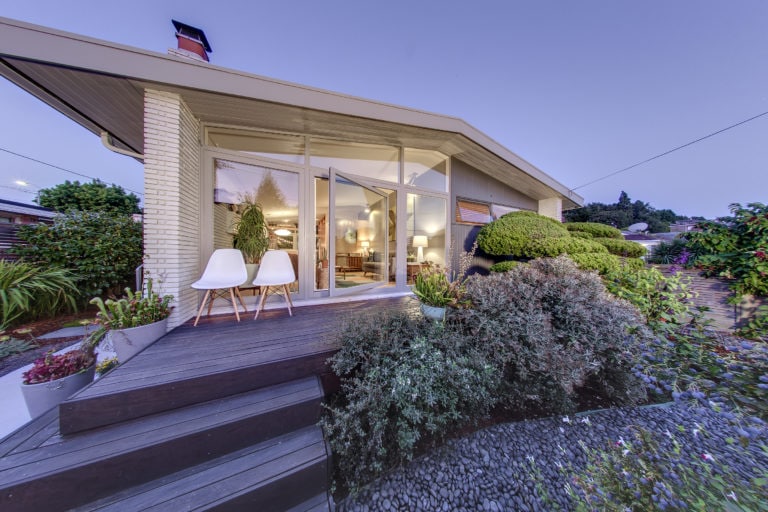

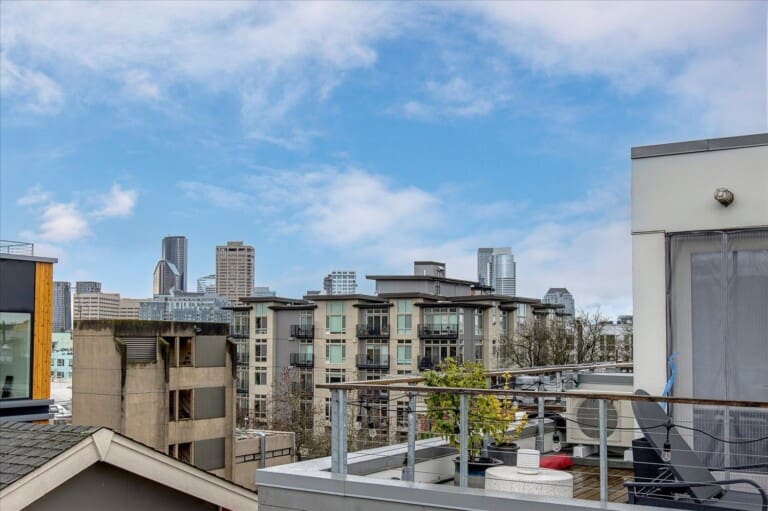

If you ask any local where the cultural heartbeat of Seattle is, they’ll almost certainly point you toward Capitol Hill. It is easily the city’s most vibrant, eclectic neighborhood—a place where historic mansions sit just blocks away from late-night music venues, indie bookstores, and some of the best coffee in the Pacific Northwest. But that popularity comes with a price tag.
For years, “Cap Hill” has been one of the most expensive places to sign a lease in King County. However, as we settle into early 2026, we are seeing the market shift in interesting ways. While it’s still a premium zip code, prices have stabilized compared to the skyrocketing hikes of previous years.
If you are looking to move here right now, the average rent in Capitol Hill sits at approximately $2,093 per month. Of course, that number fluctuates heavily depending on whether you are looking for a micro-studio on Broadway or a spacious two-bedroom in a historic brick building near Volunteer Park.
Here is the on-the-ground breakdown of what it actually costs to live here in 2026.
Average Rent in Capitol Hill by Unit Type (2026)
When budgeting for a move here, averages can only tell you so much. The rental stock in Capitol Hill is incredibly diverse, ranging from brand-new “apodments” (micro-studios) to sprawling units in 1920s buildings.
As of February 2026, here is what you can expect to pay based on unit size:
- Studio (approx. 467 sq ft): ~$1,603 per month
- 1-Bedroom (approx. 662 sq ft): ~$2,220 per month
- 2-Bedroom (approx. 967 sq ft): ~$3,107 per month
- 3-Bedroom (approx. 1,297 sq ft): ~$4,883 per month
A Note on the Numbers
The “Studio” average is particularly interesting right now. Because Capitol Hill is a hub for students and young professionals, there is a high volume of smaller efficiency units. If you see a listing for significantly less than $1,603, check the square footage—it might be a micro-unit under 300 square feet.
On the other end of the spectrum, you will notice a significant price jump when moving from a one-bedroom to a two-bedroom unit (over $3,100). While splitting a two-bedroom with a roommate is a classic Seattle strategy, the premium on larger layouts means the savings might not be as drastic as they were a few years ago.
Capitol Hill vs. Downtown Seattle: Price & Lifestyle Comparison
A common dilemma for renters is choosing between Capitol Hill and Downtown. They are neighbors, separated only by the I-5 freeway and connected by a quick Light Rail ride, but the vibes—and the values—are distinct.
Surprisingly, living right in the middle of the Downtown skyline can sometimes be cheaper than living on the Hill.
- Downtown Seattle Studio Average: ~$1,540
- Capitol Hill Studio Average: ~$1,603
Why is Capitol Hill commanding a higher price for smaller units? It largely comes down to neighborhood character. Downtown Seattle tends to feel more corporate; it is dominated by high-rise luxury towers and business traffic. Capitol Hill, by contrast, offers a walkable “village” feel with a mix of modern builds and older, character-rich walk-ups.
If you are looking for a 1-bedroom apartment, the gap narrows. A standard 1-bedroom on the Hill averages $2,220, which is often more affordable than the ultra-luxury towers in South Lake Union or the Downtown core, where prices frequently start above $2,300.
Ultimately, you are paying for the lifestyle. If you want to leave your apartment and immediately step into a world of arts, nightlife, and community events, Capitol Hill usually wins out over the central business district.
Market Forecast: Will Rent in Capitol Hill Go Down in 2026?
If you have been watching the headlines, you might be wondering if rent is about to drop. The short answer is: we are seeing stabilization, not a crash.
Recent market data indicates a slight year-over-year decrease of about 1.4%. This suggests the market is softening, largely due to a wave of new apartment supply—specifically mid-rise buildings and micro-studios—that has come online over the last 18 months.
Most local experts are forecasting “modest, sustainable growth” or continued flatlining for the rest of 2026. This is good news for renters; it means landlords are more likely to offer concessions (like a month of free rent) to fill units than they were two years ago.
Timing Matters: Keep seasonality in mind. Seattle’s rental market is highly seasonal. Rents are typically at their lowest during the “rainy season” (November through February). If you are looking to sign a lease, doing so in late winter can lock in a lower rate than trying to move during the competitive summer months.
Beyond Rent: The Hidden Costs of Living in Capitol Hill
When you are calculating your monthly budget, the rent check is just the starting point. Capitol Hill has some specific “hidden” costs that can catch newcomers off guard.
Parking is a Premium This is the biggest budget-buster. Capitol Hill is one of the densest neighborhoods in Washington, and street parking is notoriously difficult.
- Garage Spots: Expect to pay between $200 and $350 per month for a reserved spot in your building.
- Zone Permits: Street parking permits are cheaper but do not guarantee you a spot near your front door.
Utilities (WSG) Many older buildings in Seattle do not have individual meters for water, sewer, and garbage. Instead, landlords use a “bill-back” system based on occupancy or square footage. You should budget approximately $100 per month per person for these municipal services on top of your electricity and internet.
Pet Rent Seattle loves dogs, but landlords love pet fees. Standard pet rent is usually $35 to $50 per month, usually accompanied by a refundable deposit.
The Commute Savings There is a silver lining to these costs. Capitol Hill has the best transit access in the city. With the Light Rail station at Broadway & John, you can get to Downtown, the University District, or the airport for $2.25 to $3.50. Many residents find they can ditch their car entirely, saving hundreds on insurance, gas, and that expensive parking spot.
Neighborhood Sub-Markets: Where to Rent in Capitol Hill
Capitol Hill isn’t a monolith; it’s a collection of micro-neighborhoods, each with a different price point and atmosphere.
Pike/Pine Corridor This is the center of the action. If you want to live above a coffee shop or next door to a music venue, this is the spot. Rents here command a premium for the location, and the housing stock is mostly newer luxury apartments with amenities. It is lively, loud, and convenient.
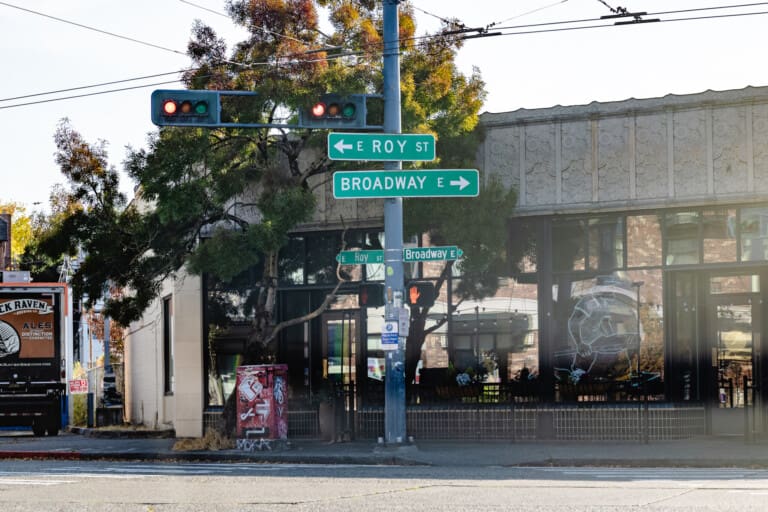
Broadway The commercial spine of the hill. Living here means you are steps away from grocery stores, the Light Rail station, and major bus lines. It is high-density living that offers maximum convenience.
15th Avenue East Just a few blocks east of Broadway, the vibe changes completely. This area feels like a quieter, “grown-up” village. You have a handful of great restaurants and essential shops, but the streets are calmer and more residential. Rents here can be slightly higher due to the desirability of the peace and quiet.
North Capitol Hill As you head north toward Volunteer Park, the apartment buildings give way to historic mansions and grand old homes. Rentals here are rarer and often more expensive, but they offer access to green space and a very quiet, tree-lined environment.
Frequently Asked Questions About Renting in Capitol Hill
Is Capitol Hill cheaper than Downtown Seattle?
It depends on the unit size. Currently, studios in Capitol Hill ($1,603) are slightly more expensive than Downtown studios ($1,540) due to high demand for the neighborhood vibe. However, larger 1-bedroom apartments in Capitol Hill often offer better value per square foot compared to the luxury high-rises in the Downtown core.
What salary do I need to live in Capitol Hill?
Most property managers in Seattle require a gross income of 3x the monthly rent. To comfortably afford the average studio at ~$1,600, you would need to earn roughly $5,800 per month, or about $70,000 annually. For a standard one-bedroom, that requirement jumps to roughly $80,000+ per year.
Why is rent so high in Capitol Hill?
You are paying for high walkability, unmatched transit access, and cultural density. Demand remains consistently high because few other neighborhoods in the Pacific Northwest offer this level of dining, nightlife, and park access within walking distance of the city center.
Do Capitol Hill apartments come with parking?
Rarely. In older brick buildings, on-site parking is almost non-existent. In newer modern developments, parking is usually available but is almost always charged as a separate monthly fee ranging from $200 to $350.