

Capitol Hill is one of the most dynamic neighborhoods in Seattle. It is a place where historic mansions near Volunteer Park sit just blocks away from the buzzing nightlife of the Pike/Pine corridor. Because the neighborhood is so diverse—blending quiet, tree-lined streets with high-density urban living—pricing a home here isn’t a one-size-fits-all formula.
If you are looking to sell your home, getting the price right is the single most critical lever you can pull. In a tech-savvy market like ours, buyers are glued to their notifications. They know exactly how long a home has been active. Overpricing is dangerous because it can turn a fresh listing into a “stale” one in a matter of weeks. The goal is to find that sweet spot: a number that generates immediate urgency without leaving equity on the table. This is where a good real estate agent will earn their commissions, by guiding you in pricing correctly.
The “Tale of Two Markets”: Condos vs. Single-Family Homes
Before we talk about specific numbers, we have to look at what you are selling. Capitol Hill is effectively two different real estate markets operating side-by-side. The strategy for a standalone craftsman is completely different from a one-bedroom unit in a modern building.
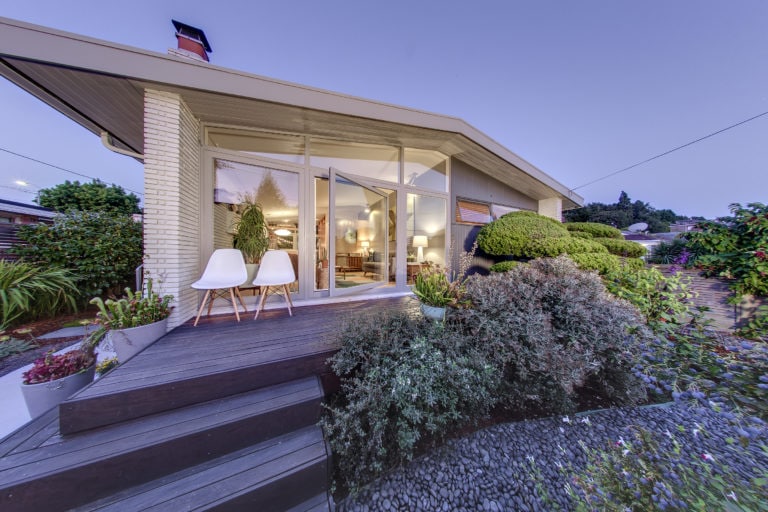
Single-Family Homes Houses here are a scarce resource. Because inventory is chronically low, sellers of single-family homes often hold the leverage. In this segment, we frequently see homes priced specifically to trigger bidding wars. If you own a detached home, you are the prize, and the market often behaves accordingly.
Condos The condo market is a different beast. Inventory is generally higher, and buyers have plenty of options, ranging from vintage co-ops to brand-new developments. Because of this abundance, condo pricing requires surgical precision. You aren’t just competing with your neighbor; you are competing with new construction incentives and the total monthly cost, which includes HOA dues.
Townhomes and ADUs Townhomes offer a middle ground, appealing to buyers who have been priced out of the $1.5M+ single-family market but need more space than a typical condo offers. We are also seeing “non-traditional” condos—like Backyard Cottages (DADUs)—influence pricing. These unique properties need to be positioned carefully to highlight their privacy compared to a traditional stacked flat.
Core Pricing Strategies for Capitol Hill Sellers
Once you understand your property type, you generally have three paths for setting your list price. A solid Comparative Market Analysis (CMA) will help you decide which lane to pick, taking into account the seller closing costs.
Strategy 1: Market Value Pricing This is the straightforward approach: listing at the exact fair market value suggested by recent sales. This works best in a balanced market or for unique homes that don’t have clear competitors. It tells buyers, “This is what it’s worth, and I’m being fair.”
Strategy 2: Just Below Market (The “Event” Strategy) This is incredibly common for single-family homes in Capitol Hill during the spring market. You list the home 5–10% below its expected value to drive a frenzy of traffic. The goal is to create an “auction effect,” where multiple offers and escalation clauses push the final sale price well above where you started.
Strategy 3: Aspirational Pricing This involves testing a high number to see if a buyer bites. In Seattle’s efficiency-driven market, this is risky. Buyers here are data-driven; they know the comps. If you aim too high, you risk sitting on the market, necessitating a price drop later that can carry a stigma.
The Psychology of Search Thresholds
Pricing isn’t just about the value of the dirt and the structure; it’s about the algorithm. Most buyers start their journey on apps like Zillow or Redfin, and they filter by price brackets.
For years, retail psychology taught us to use prices like $799,000 to make an item feel cheaper. In real estate, however, hitting the round number often works better. If you list at $800,000, you appear in the search results for buyers looking up to $800K and buyers looking for $800K and up.
If you list at $799,000, you become invisible to the buyer whose search starts at $800,000. You want to avoid “price desolate zones”—odd ranges where few people are looking. Aligning your price with these digital thresholds maximizes your visibility.
Local Nuances That Shift Your Price Tag
Capitol Hill is a neighborhood defined by hyper-local features. Two homes with the same square footage can trade for vastly different sums depending on exactly where they sit on the hill.
Walkability and Transit Proximity to the Link Light Rail station is a major financial driver. Buyers pay a premium for the lifestyle of being able to ditch the car and commute downtown or to the airport effortlessly. If your home has a high Walk Score, that is a monetizable asset.
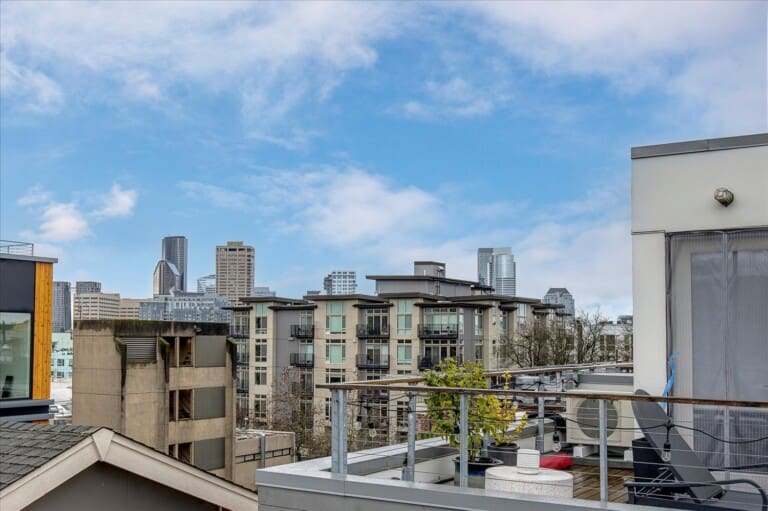
Views Does your living room overlook the Space Needle, the Olympics, or Lake Union? View corridors in Seattle are protected and prized. A clear view can add significant value compared to a similar home just one block over that looks at a retaining wall.
Parking In dense areas like Capitol Hill, a dedicated off-street parking spot is gold. For condo sellers specifically, a unit with a garage spot can command a drastically higher price than one with street parking only. It’s often the deciding factor for buyers.
Noise Factors Being close to the action is great, but being too close has trade-offs. Homes slightly removed from the Pike/Pine corridor often sell for more than those directly on top of the nightlife, where noise can be an issue.
Timing Your Listing: The “Rainy City” Factor
Seattle’s real estate market has a distinct seasonal rhythm, largely dictated by our weather.
The Spring Peak (Feb–May) This is traditionally when we see the highest inventory turnover and the most aggressive pricing potential. Buyers are out of hibernation, and the frantic energy often leads to higher sale-to-list ratios.
The Summer Slump July and August can be surprisingly slow. Locals are often traveling, hiking, or soaking up the sun while it lasts. Inventory can sit a little longer during these months, so patience is key.
The Fall Window (Sept–Oct) We often get a second “mini-season” right after Labor Day. Buyers who missed out in the spring are motivated to close before the holidays.
Winter Inventory is low, but the buyers who are looking in the dark and rain are usually serious. You have to be very accurate with your pricing here, as you don’t have the benefit of blue skies and blooming gardens to boost curb appeal.
Managing Bidding Wars and Offer Reviews
If you price your home competitively, especially a single-family home, you need a plan for handling success.
Offer Review Dates You might see listings that say, “Offers due Tuesday at noon.” This is a strategy to concentrate demand. By forcing all interested parties to submit at once, you create a competitive environment that allows you to compare terms side-by-side.
Escalation Clauses An escalation clause is a tool buyers use to bridge the gap between the list price and market value. Essentially, a buyer says, “I will pay $1,000,000, but I will beat any other verifiable offer by $5,000 up to a cap of $1,100,000.” Understanding these clauses is vital for sellers to maximize their net proceeds.
Pre-Inspections In a hot market, we often encourage buyers to inspect the home before they even write an offer. This allows them to waive their inspection contingency, making their offer much stronger and effectively raising the net value to you, the seller.
When to Pivot: Handling Price Reductions
Sometimes, despite the best analysis, the market pushes back. Recognizing this quickly is the mark of a smart seller.
We often talk about the “14-Day Rule.” If you haven’t received an offer—or if showing volume is low—after two weeks, the market has spoken. Your price is likely too high for the current condition or location.
When this happens, it is usually better to make one meaningful cut—say 3% to 5%—rather than a series of small, painful reductions. Small cuts keep the listing bleeding and make buyers wonder what is wrong. A decisive adjustment, perhaps paired with refreshed photos, signals that you are serious about selling your Seattle home.
Frequently Asked Questions
Does staging really affect the list price in Capitol Hill?
Absolutely. Capitol Hill buyers are generally design-conscious and appreciate an aesthetic that matches the neighborhood’s vibe. Professional staging helps buyers visualize the potential of the space, often leading to better photos and higher offers.
How do HOA dues impact my condo’s asking price?
High HOA dues lower a buyer’s purchasing power because lenders look at the total monthly payment. If your building has high dues, you may need to set a slightly lower list price to keep the total monthly cost competitive with other buildings.
Is it better to price high and negotiate down?
This is a common misconception. In our local market, pricing high often leads to a listing sitting stagnant, which invites lowball offers. It is generally more effective to price accurately to generate competition, rather than trying to “trick” the market.
What is an offer review date?
An offer review date is a specific deadline set by the seller to review all submitted offers at once. It is designed to create a sense of urgency and structure a bidding war, ensuring you get to see the market’s best price all at the same time.