

If you are looking into relocating to the Pacific Northwest, you have probably already heard the buzz about Capitol Hill. It’s the neighborhood that everyone talks about—usually with very strong opinions.
The Verdict: Is Capitol Hill the Best Spot for Young Professionals?
For many Gen Z and Millennial workers, the answer is a resounding yes. Capitol Hill is the dense, cultural heart of Seattle, offering a “work hard, play hard” lifestyle that is difficult to find anywhere else in the city. If you are looking for a place where you can live a completely car-free life, walk to the best dining in the region, and never run out of things to do, this is your spot.
It is also the LGBTQ+ epicenter of the Pacific Northwest, fostering a highly inclusive community where self-expression is the norm. However, living here comes with trade-offs. It is not a quiet suburban retreat. If you want silence after 9:00 PM, this might not be for you. But if you want to be right in the middle of the action, our moving to seattle guide usually puts this neighborhood at the top of the list for young talent.
The Vibe: Eclectic, Energetic, and LGBTQ+ Friendly
When you walk around Capitol Hill, the first thing you notice is the energy. The demographic here is heavily skewed toward residents aged 25–44. Unlike neighborhoods like Queen Anne or Magnolia, which can feel a bit sleepier or more family-oriented, “Cap Hill” feels like it is constantly in motion.
It is important to know that the neighborhood is huge, and the vibe changes depending on which street you are on.
- Pike/Pine Corridor: This is the high-energy core. It is loud, party-centric, and packed with foot traffic.
- 15th Ave E & 19th Ave E: Just a few blocks away, these streets feel like different worlds. They are quieter, leafier, and much more residential, offering a nice break from the chaos while keeping you close to the action.
The area is deeply rooted in the arts and counter-culture. Between the venues used for the Seattle International Film Festival and literary hubs like Hugo House, the creative spirit here is still very much alive despite the influx of tech workers.
Work & Commute: Ideally Located for Tech and Healthcare
For young professionals, the commute is often the deciding factor. Fortunately, Capitol Hill is arguably the best-connected neighborhood in Seattle for getting to major employment hubs.
If you work at Amazon or in South Lake Union (SLU), you are looking at a very easy commute. Many residents simply walk 15–20 minutes downhill to the office. If the weather is typically Seattle (rainy), the First Hill Streetcar or a quick bus ride gets you there in minutes.
For those heading to the Downtown or Financial District, the Capitol Hill Station (Link Light Rail) is a game changer. You can get from the station to Westlake Center in about 4 minutes. With trains running every 8–10 minutes during peak hours, you barely need to check a schedule.
Local Agent Tip: If you work at Microsoft in Redmond, you don’t necessarily need to live on the Eastside. The “Microsoft Connector” shuttle has specific stops in the neighborhood, including convenient pickup points near 19th Ave E. This is a massive perk for full-time employees who want the urban lifestyle without the driving commute.
The neighborhood is also a major hub for healthcare professionals. If you work at Swedish Medical Center, Virginia Mason, or Kaiser Permanente (First Hill), many of these campuses are within easy walking distance.
Remote Work Culture: Best Coffee Shops and Spaces
If you work from home, you won’t be stuck in your apartment. Capitol Hill is famous for its “coffice” (coffee office) culture, and you will see laptops open everywhere.
- Kaladi Brothers: A favorite for its multi-level, artsy vibe and community feel.
- Overcast Coffee Co: Great for sunny days when you want to utilize terrace seating.
- Ghost Note: The spot to go when you need great espresso and a focused atmosphere.
If you need a more formal setting, there is a high density of coworking spaces like The Cloud Room, or you can easily hop down to WeWork locations in nearby SLU.
Rent and Cost of Living: What to Expect in 2026
Let’s talk numbers. While Seattle is expensive, we have seen rents stabilize and even dip slightly—about 1.4% compared to the peaks of 2025. However, this is still a premium market, and you are paying for the location.
Studios are incredibly popular with singles here. You will find many “micro-studios” (sometimes called SEDUs) for under $1,400, but a standard, comfortable studio typically averages around $1,600.
One-bedroom apartments are the standard for most young professionals. The market for these is competitive, especially in buildings with amenities like rooftop decks. As of early 2026, expect to budget around $2,200 per month. If you are looking for a two-bedroom to split with a roommate, the average hovers near $3,100.
If you are looking at buying, the condo market is active, but be aware that single-family homes in Capitol Hill are largely out of reach for early-career buyers, with prices often starting well above $1.3M. For most, renting is the way to start here. Check out some seattle apartment hunting tips to help navigate the concessions and lease terms landlords are currently offering.
After Hours: Nightlife, Dining, and Social Scene
When the laptops close, the neighborhood wakes up. The nightlife here ranges from beloved dive bars like Linda’s Tavern (famous for being the last place Kurt Cobain was seen) to high-energy dance clubs like Neumos and Q Nightclub.
The dining scene is equally diverse. You have staples like Roma Roma for solid pizza, but the neighborhood is always churning out new hot spots. Places like La’ Shukran, which gained traction in late 2024 and 2025, keep the food scene fresh.
Culturally, the Pike/Pine corridor is the main drag for weekend activity, while Broadway leans slightly more commercial. The biggest event on the calendar is the Capitol Hill Block Party, a major music festival that takes over the streets every summer. It’s loud, crowded, and an absolute blast if you live here.
The Reality Check: Safety, Noise, and Grit
I always tell clients to walk the neighborhood at night before signing a lease, because the urban grit is real.
Safety: Property crime is the most common issue. Car break-ins and package theft happen frequently, which is why secure parking and package lockers are high on the priority list for renters. While violent crime has seen upticks in specific nightlife pockets, citywide trends in 2026 are showing improvement compared to previous years.
Noise: This is a dense urban environment. You will hear sirens, construction, and crowds leaving bars at 2:00 AM. If you are sensitive to noise, this is a major factor to consider.
Homelessness: You will see unhoused neighbors, particularly in parks like Cal Anderson and on street corners. This is a reality of living in urban Seattle.
Recommendation: If you want the Capitol Hill address but want to avoid the worst of the noise and grit, look for apartments north of Roy St or east of 15th Ave.
Parks and Recreation
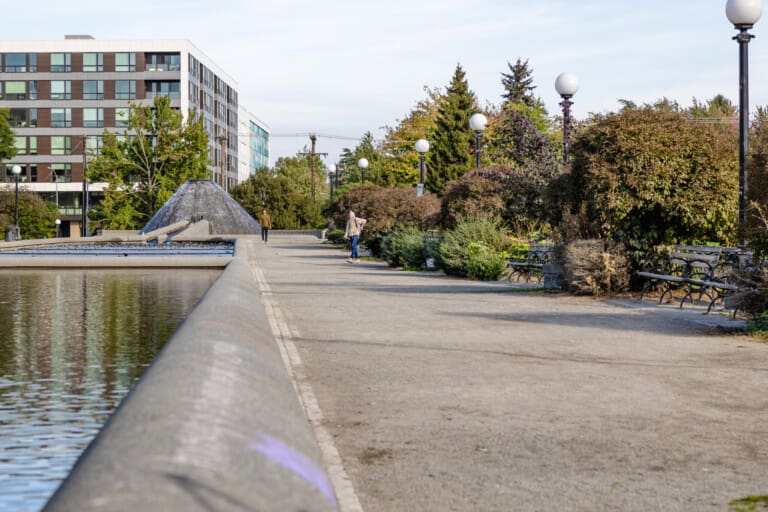
Despite the concrete, you don’t have to sacrifice green space. Cal Anderson Park acts as the neighborhood’s “front yard.” It has sports fields, a fountain, and is the central gathering spot for everything from protests to dodgeball games.
Further north, Volunteer Park is a true crown jewel. It features a conservatory, the Seattle Asian Art Museum, and a water tower you can climb for incredible views of the city. With a Walk Score consistently over 90, you also have easy access to the Arboretum via bus or bike routes for when you need deeper nature.
How Capitol Hill Compares to Other Neighborhoods
If you are on the fence, here is how Cap Hill stacks up against the competition:
- vs. South Lake Union (SLU): SLU is much closer to Amazon and feels cleaner and newer. However, many residents feel it lacks the “soul,” history, and nightlife that Capitol Hill offers. living in south lake union is often more about convenience than culture.
- vs. Ballard: Ballard has an incredible brewery scene and a strong community feel. The downside? It is often called a “transportation island” because getting to downtown or the Eastside takes much longer.
- vs. Belltown: Belltown offers high-rise living with similar nightlife options. However, it tends to have less greenery and doesn’t quite have the same “neighborhood” community vibe as the Hill.
Who Should (and Shouldn’t) Move Here?
Best For: Social butterflies, LGBTQ+ individuals, tech workers who want a 15-minute commute, and anyone who wants to ditch their car.
Not For: People who are sensitive to noise, those who need large private parking spaces, or anyone looking for a “white picket fence” experience.
Frequently Asked Questions
Is Capitol Hill Seattle safe for single young professionals?
Safety is nuanced here. While property crime like car prowls is common (and the area often rates poorly on crime maps due to density), many young professionals feel safe walking in the busy corridors due to the high foot traffic. However, it is always smart to stay aware of your surroundings, especially late at night near nightlife zones.
Do I need a car living in Capitol Hill?
Absolutely not, and honestly, having one can be a hassle due to expensive parking and traffic. With a Walk Score of 90+ and immediate access to the Link Light Rail and Streetcar, this is one of the easiest places in Seattle to live car-free.
How much should I budget for rent in Capitol Hill in 2026?
You should aim to budget around $1,600 for a standard studio and $2,200 for a one-bedroom apartment. If you are looking for luxury amenities or a view, you should pad that budget by another $300–$500 per month.
Everything you need to know about living on Capitol Hill:
- Capitol Hill Neighborhood Page >
- Your Detailed Capitol Hill Neighborhood Guide >
- Everything You Need To Know About Buying A Condo On Capitol Hill >
- Details About Buying a Home On Capitol Hill >
- Is Buying On Capitol Hill Worth The Price >
- Who Is The Best Real Estate Agent In Capitol Hill >
- Alejandro and Ryan’s Capitol Hill Home Buying Journey >
- A Few Of The Many LGBTQ+ Neighborhoods In Seattle (Capitol Hill)>
- Best Transit Neighborhoods In Seattle Hill (Capitol Hill) >
Kim has a very unique perspective in the Capitol Hill real estate market. She has lived, worked, and played on Capitol Hill for over 25 years. She has also been recognized nationally for her innovation and activism. Are you looking for a Diva’s perspective on Capitol Hill Seattle’s real estate?
Call Kim directly at 206-850-3102 or send her an email at kim@teamdivarealestate.com to chat!