
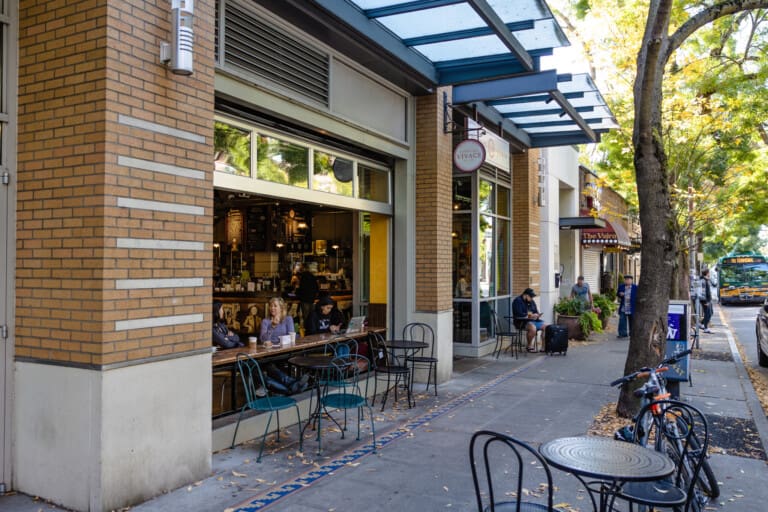

If you walk down Broadway on a Tuesday morning, you will notice a distinct flow to the foot traffic. You see tech workers heading downhill toward South Lake Union, nurses and doctors briskly walking toward First Hill, and baristas opening up shop for the remote workers claiming their corner tables.
The Capitol Hill Seattle job market in 2026 is a unique ecosystem. It is simultaneously a high-powered residential base for the city’s corporate workforce and a bustling economic engine in its own right. Whether you are looking to pour lattes on Pike Street or code for a cloud computing giant, understanding the local landscape is key to making this neighborhood work for you.
The Capitol Hill Seattle Job Market in 2026
To understand the employment scene here, you have to look at Capitol Hill’s dual personality. On one hand, it is a vibrant local economy powered by healthcare, education, and a massive service industry. On the other, it is the preferred “bedroom community” for downtown and South Lake Union professionals who want a gritty, urban lifestyle rather than a quiet suburban existence.
As we move through 2026, the economic context here has stabilized. While 2025 saw some fluctuations in the tech sector, we are seeing a “tech resilience” trend where hiring has normalized—perhaps not at the frenzied pace of the early 2020s, but steady enough to keep housing demand high. The competition for local jobs remains fierce, largely because the residents here tend to have high educational attainment, meaning you are often competing with highly qualified candidates even for entry-level roles.
Another major factor for service workers this year is the wage floor. As of January 1, 2026, the Seattle minimum wage has increased to approximately $21.30 per hour. This makes service roles in the neighborhood more lucrative than in surrounding suburbs, though the cost of living in Seattle often absorbs much of that increase.
Top Industries Hiring in Capitol Hill
While many residents commute out, there are thousands of jobs located physically within the neighborhood boundaries. If you are looking to work where you live, these are the sectors signing the paychecks.
Healthcare This is arguably the neighborhood’s anchor. The boundary between Capitol Hill and First Hill (often called “Pill Hill”) is blurry, and major institutions drive the local economy. Kaiser Permanente and Swedish Medical Center offer a massive number of roles ranging from specialized surgeons and nursing staff to administrative support, IT, and facilities management.
Education Seattle Central College is a dominant presence on Broadway. Beyond being a place for students, it is a major employer for faculty, administrative staff, and maintenance crews. The college’s presence also feeds a steady stream of customers to nearby businesses, supporting the local retail economy.
Hospitality & Nightlife The Pike/Pine corridor is world-famous for its nightlife, and that requires a massive workforce. There is constant demand for bartenders, servers, security personnel, and chefs. Establishments range from high-volume dive bars to James Beard Award-winning restaurants, offering opportunities for both entry-level staff and career hospitality professionals.
Arts & Culture Capitol Hill fights hard to keep its artistic soul. Small businesses, independent movie theaters, and music venues like Neumos provide niche employment opportunities. While these roles are often harder to find than corporate gigs, they are essential to the fabric of the neighborhood.
Commuting to Tech Hubs: Amazon, SLU, and Downtown
A huge portion of the population lives in Capitol Hill specifically because it is the most convenient place to be if you work in tech but hate driving. The neighborhood serves as a distinct “lifestyle choice” for workers who want walkability and culture after they clock out.
If you work in South Lake Union (home to Amazon, Google, and Meta offices), your commute is practically non-existent. Many residents simply walk 15 to 20 minutes downhill via Denny Way or Olive Way. If the weather is typical Seattle gray, the Route 8 bus is a reliable option that cuts across the corridor.
For those working in the Downtown/Financial District, the commute is even faster. Since the opening of the Capitol Hill Light Rail Station, you can get from the heart of the neighborhood to Westlake Center in about 4 minutes. This accessibility has made living in Capitol Hill and working downtown one of the most efficient setups in the city. There is also a significant contingent of “reverse commuters” who live here for the vibe but drive or take connector shuttles across I-5 to the Eastside for jobs at Microsoft or Nintendo.
Remote and Hybrid Work in Capitol Hill
The work-from-home culture is deeply embedded in the streets here. You will rarely enter a coffee shop on a weekday without seeing a sea of laptops. To support this, the neighborhood has developed infrastructure that caters heavily to the hybrid professional.
Coworking Spaces If your apartment feels too small, the neighborhood offers several high-end third spaces. The Cloud Room is a popular option that blends a workspace with a social club vibe, complete with a bar and community events. Other spots like CENTRL Office and nearby The Pioneer Collective offer more traditional flexible desk arrangements.
Coffee Shop Culture For those who prefer a more casual environment, places like Little Oddfellows (inside the Elliott Bay Book Company) or any of the independent roasters on 15th Avenue serve as makeshift offices. Most apartment buildings in the area are retrofitted or built with high-speed fiber internet, so connectivity is rarely an issue for remote workers.
Salaries and Cost of Living Reality Check
It is important to have a frank conversation about the money required to enjoy the lifestyle here. The cost of entry is high, and wages play a huge role in who stays and who leaves.
Tech and healthcare salaries in this zip code frequently exceed $100,000 to $150,000 annually. This level of income is generally necessary to comfortably afford the modern “luxury” apartments that have sprung up around the Light Rail station. If you are moving here for a tech role, your salary will likely align with the local cost of living.
However, there is a disconnect for the service industry. While the ~$21.30 per hour minimum wage is one of the highest in the country, the average rent for a one-bedroom apartment typically hovers between $2,200 and $2,700 depending on amenities. This creates a dynamic where many of the people pouring drinks or staffing shops in Capitol Hill cannot afford to live in the immediate vicinity. Many service workers commute into the neighborhood from more affordable areas, rather than living where they work.
Networking and Job Search Tips for Capitol Hill
If you are trying to land a role here, relying solely on online applications can be tough because of the competition. You need to be proactive.
Networking Events For tech and creative roles, look for meetups happening in nearby SLU or mixers hosted at venues like The Cloud Room. The physical proximity to the tech hub means that “casual” networking often happens at happy hours along the Pike/Pine corridor.
Local Boards and Agencies If you are targeting the major institutions, check the specific career boards for the University of Washington (which has clinics in the area) or Swedish Medical Center. For creative or short-term corporate roles, local staffing agencies that specialize in Seattle placements are often a faster route than general job boards.
Walk-ins For the hospitality sector, the old-school approach still works. Physical presence matters. Visiting bars and restaurants on Pike/Pine during off-peak hours (like a Tuesday afternoon) with a resume in hand is often more effective than an email that gets buried in a manager’s inbox.
Frequently Asked Questions
What are the biggest employers in Capitol Hill Seattle?
The largest employers physically located in or immediately adjacent to the neighborhood are major healthcare institutions like Kaiser Permanente and Swedish Medical Center. Seattle Central College is also a significant employer for educational and administrative staff.
Is Capitol Hill a good place to live for Amazon employees?
Yes, it is extremely popular among Amazon employees due to its proximity to the South Lake Union campus. It offers a walkable commute (roughly 15–20 minutes) and a more vibrant nightlife and dining scene compared to the quieter, corporate atmosphere of SLU.
What is the minimum wage in Capitol Hill Seattle in 2026?
As of January 2026, the minimum wage in Seattle is approximately $21.30 per hour. This applies to hourly workers in Capitol Hill, making service jobs here higher paying than in areas outside the city limits.
How long is the commute from Capitol Hill to Downtown Seattle?
The commute is exceptionally fast thanks to the Link Light Rail. The ride from Capitol Hill Station to Westlake Station in downtown Seattle takes only about 4 minutes, making it one of the most connected neighborhoods in the city.
Everything you need to know about living on Capitol Hill:
- Capitol Hill Neighborhood Page >
- Your Detailed Capitol Hill Neighborhood Guide >
- Everything You Need To Know About Buying A Condo On Capitol Hill >
- Details About Buying a Home On Capitol Hill >
- Is Buying On Capitol Hill Worth The Price >
- Who Is The Best Real Estate Agent In Capitol Hill >
- Alejandro and Ryan’s Capitol Hill Home Buying Journey >
- A Few Of The Many LGBTQ+ Neighborhoods In Seattle (Capitol Hill)>
- Best Transit Neighborhoods In Seattle Hill (Capitol Hill) >
Kim has a very unique perspective in the Capitol Hill real estate market. She has lived, worked, and played on Capitol Hill for over 25 years. She has also been recognized nationally for her innovation and activism. Are you looking for a Diva’s perspective on Capitol Hill Seattle’s real estate?
Call Kim directly at 206-850-3102 or send her an email at kim@teamdivarealestate.com to chat!